
A beautiful manicure often comes down to one small decision: knowing when to stop adding detail. I’ve found that a single well-placed leaf, curve, or color accent can make a manicure feel much more intentional than covering every nail with decoration. The goal is to create a visual rhythm where some nails attract attention while others give the design enough breathing room.
When I plan a seasonal manicure, I usually choose one main feature first and build the rest around it. Fall colors can come from warm oranges, burgundy, olive, brown, muted pink, or even unexpected lavender and blue. The key is keeping the shapes readable, especially on shorter nails, and using contrast carefully so every detail has a purpose.
Pastel Tips With A Full Motif Menu
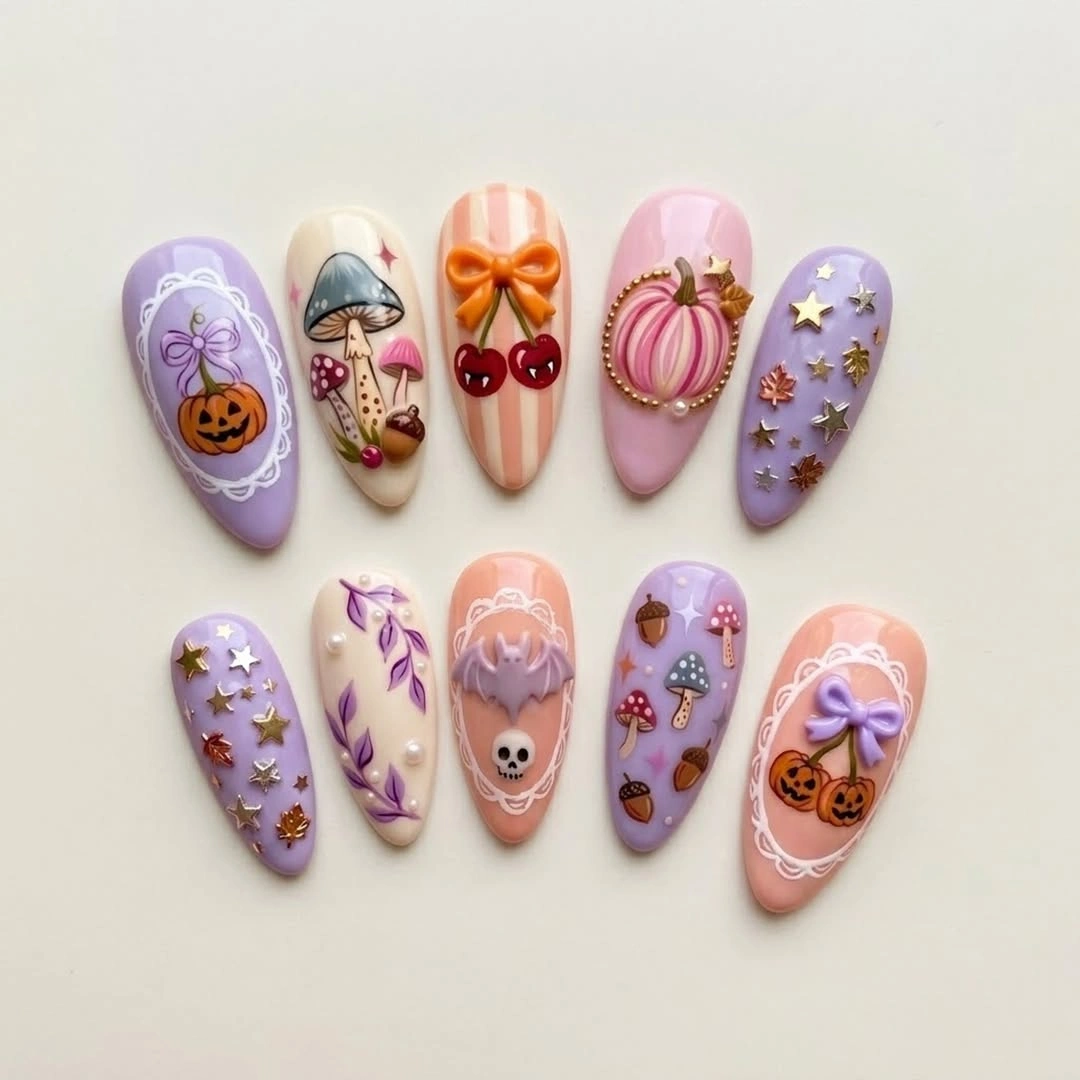
A collection of pastel nail tips can show just how many directions fall nail art can take without relying on deep, dramatic colors. Separate tips featuring lavender, blush, pumpkin-inspired shapes, leaves, bows, and stars create a playful menu of seasonal possibilities against a soft background. I like this approach because it demonstrates that autumn manicures can feel delicate and colorful at the same time.
The open background around each tiny illustration is what keeps the display looking clean. Each motif has enough room to be recognized, even when several colors are used throughout the collection. For a finished manicure, I would select two or three related motifs rather than trying to place every idea on one hand.
On short nails, I recommend choosing broader symbols and leaving generous space around them. A small pumpkin paired with a leaf can work beautifully as an accent, while the remaining nails can use coordinating colors. Keeping the line weight consistent will make the finished set look much more intentional.
Black Leaf Sketches On A Blush Base
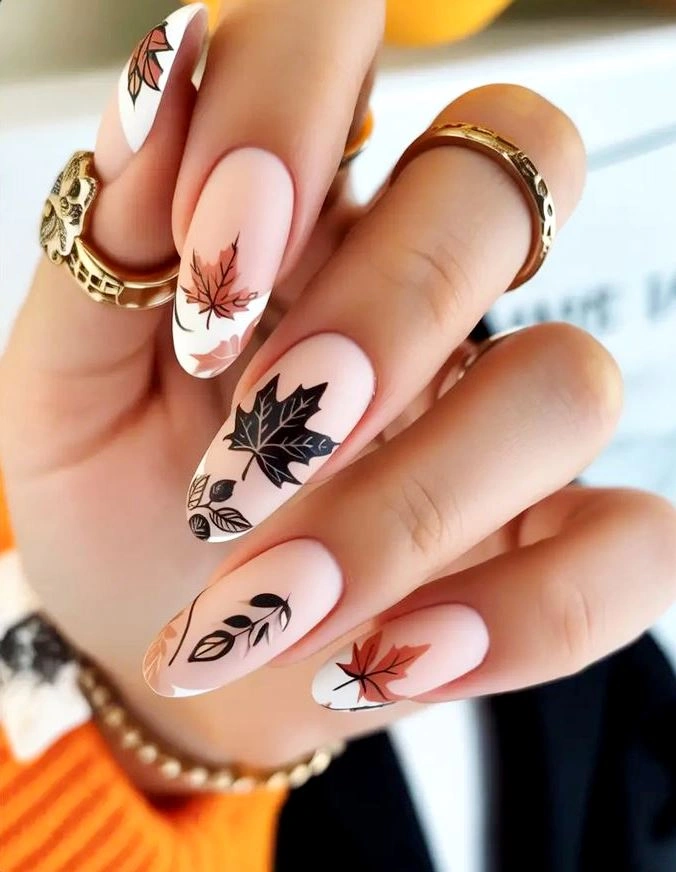
A soft blush background creates a beautiful canvas for delicate black leaf sketches. I especially like this combination because the pale base keeps the manicure feminine while the dark botanical lines provide enough contrast to make the artwork noticeable. Small rust and burgundy touches can add warmth without competing with the main leaf drawings.
The black linework should remain the strongest element because it gives the manicure its definition. The blush background acts almost like negative space, allowing each botanical shape to stand apart instead of becoming part of a crowded pattern. The elongated almond shape also gives the leaves room to follow the natural direction of the nail.
For shorter nails, I would simplify the artwork to one larger leaf on an accent nail and perhaps one small warm-colored detail nearby. Trying to reproduce several fine sketches on a compact surface can make the design difficult to read. The simpler version will feel more relaxed while preserving the same fall-inspired palette.
Forest Green French Edges On Pale Pink
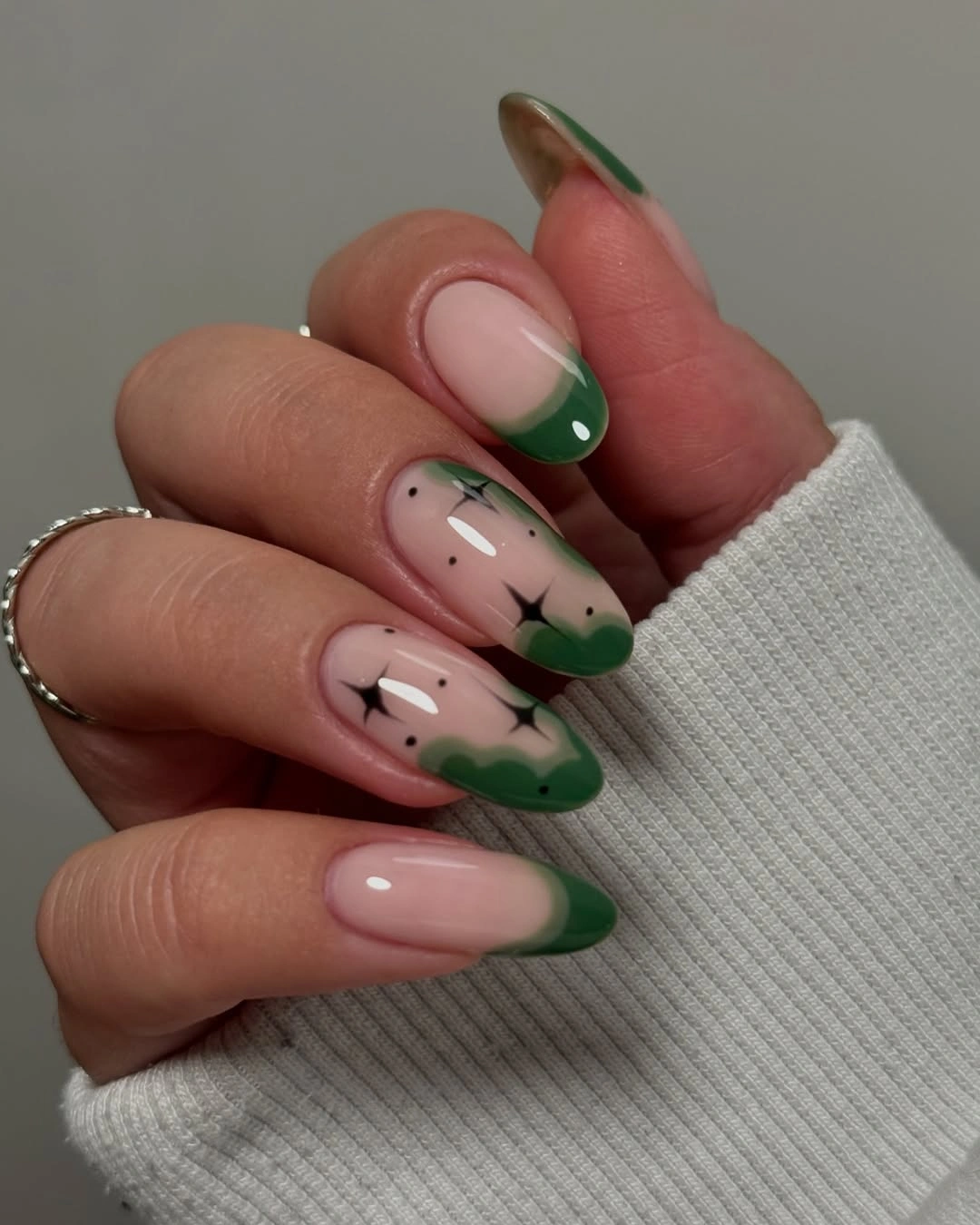
Forest green is one of my favorite alternatives to traditional black for fall French manicures. Against a pale pink base, the deep green tips create a refined seasonal contrast without making the entire manicure feel dark. Small dots or subtle marks can be added to a few nails, but the green edge should remain the main feature.
The beauty of this design comes from following the natural shape of the almond tip. The saturated green frames the edge while the pale pink center stays open, creating a manicure that feels clean and elongated. Any small decorative details should remain secondary so they do not compete with the French edge.
For shorter nails, I would make the green tip slightly thinner and use it on fewer fingers if necessary. A soft oval shape can also carry the same color combination, although the result will look a little more rounded. Keeping plenty of pink visible will preserve the light, sophisticated quality of the design.
Three Purples And One Dotted Accent
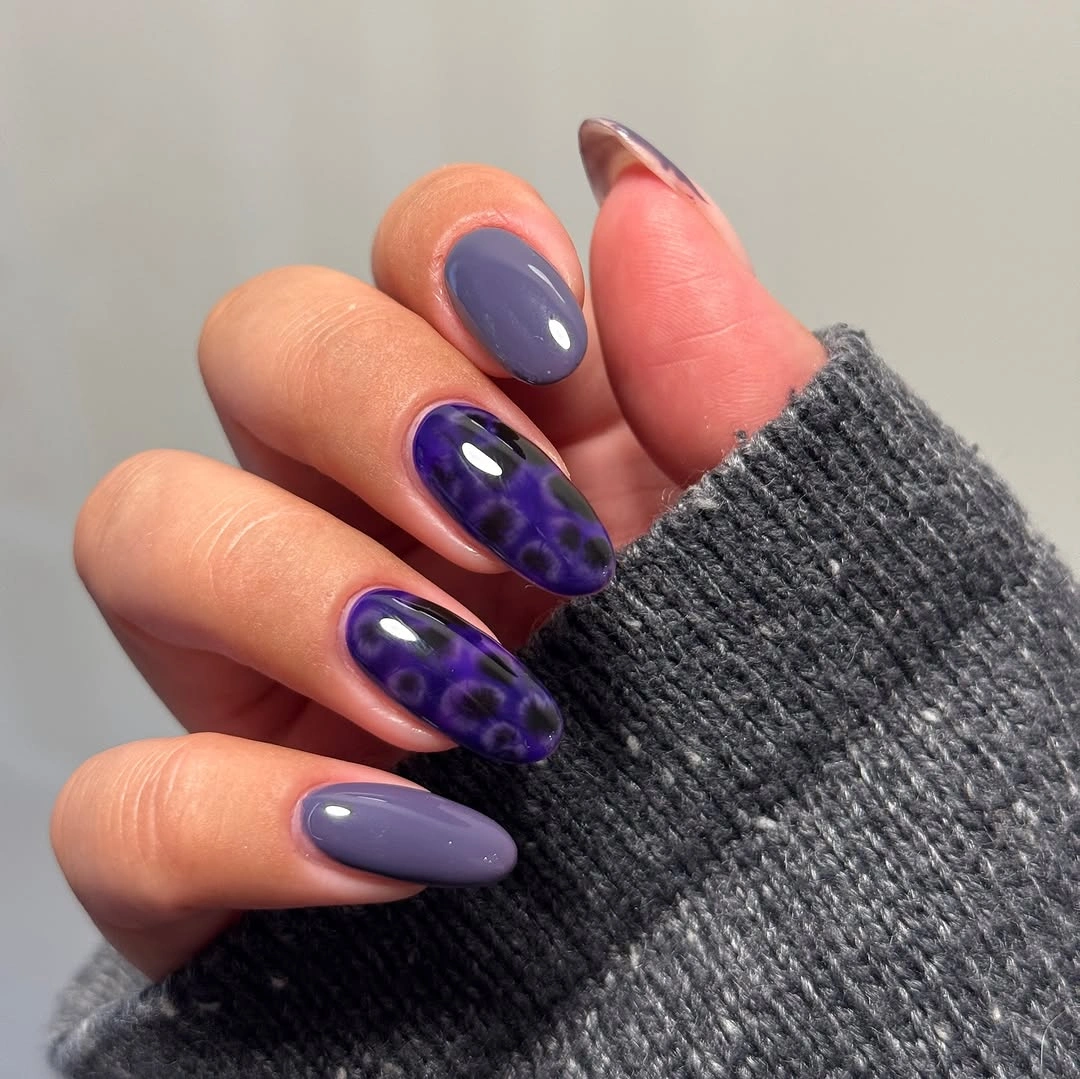
A tonal purple manicure can feel surprisingly seasonal when several shades are layered across the hand. Lavender, mauve, and deeper violet create subtle variation while one accent nail receives a collection of darker dots. I like this idea for anyone who wants fall color without relying on leaves, pumpkins, or traditional orange tones.
The dotted nail works because it breaks the repetition without taking over the manicure. Most of the nails remain glossy and uncomplicated, allowing the accent to become a natural stopping point for the eye. Using related shades rather than completely different colors also keeps the overall look cohesive.
For a shorter manicure, I would use two purple shades and reserve the dots for one accent nail. Slightly larger dots with more space between them will remain clearer on a small surface. This is a good option when you want something seasonal and decorative while keeping the final design relatively easy to wear.
Orange And White Lines Following Stiletto Tips
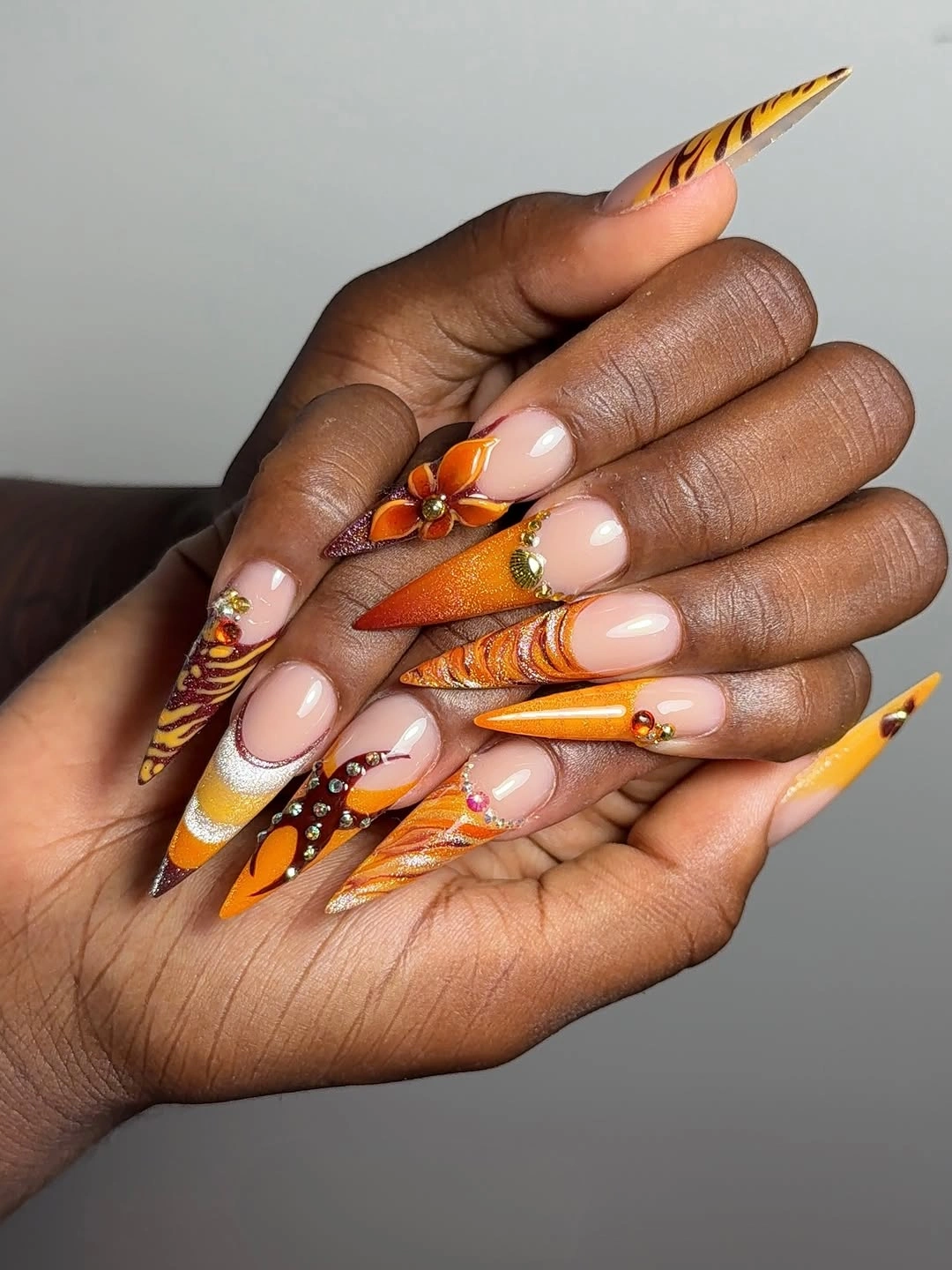
Long stiletto nails create a dramatic foundation for orange, amber, white, and dark graphic lines. The warm shades can be arranged in pointed sections that follow the direction of the nail, creating movement without depending on literal autumn illustrations. I like this type of design because the silhouette and color placement become the artwork.
White spaces between the orange sections are especially important. They separate the warm tones and prevent the manicure from becoming one heavy block of color. Dark outlines can then sharpen the boundaries and give the individual sections a more finished appearance.
If you prefer something more practical, I would adapt the idea to medium almond nails and use the orange-and-white contrast on only a couple of fingers. The pointed movement will be softer on a shorter shape, but the warm color combination will remain strong. Fewer lines will also make the design much easier to maintain.
Silver And Black Spots On Short Nails
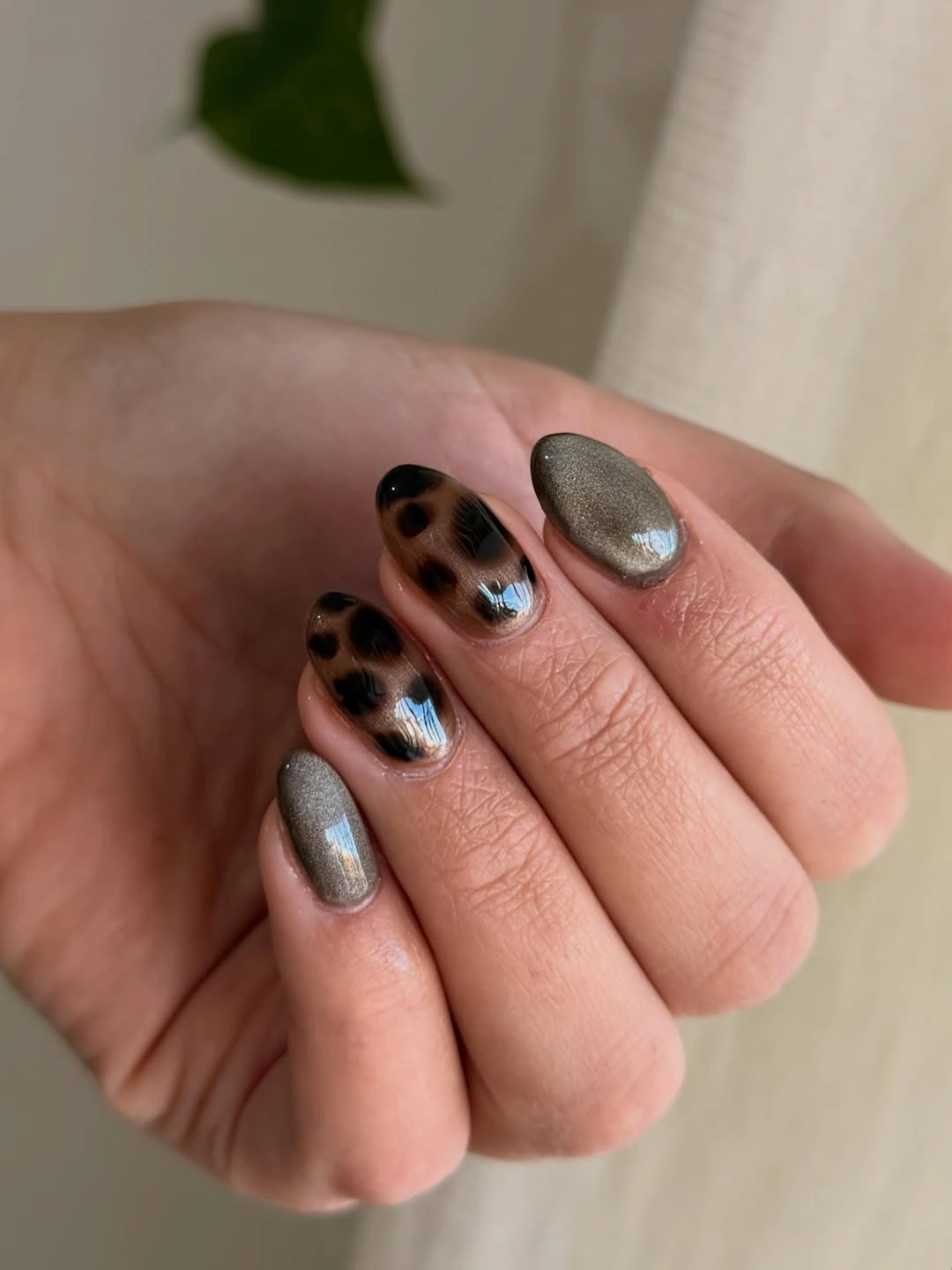
Short rounded nails can look stylish with a metallic silver base and a few black spotted accents. I like this combination because the reflective background provides enough interest on its own, while the darker spots create a graphic detail without requiring a complicated pattern.
The most important styling decision is limiting where the spots appear. Leaving several nails completely silver gives the hand a clear rhythm and prevents the black accents from becoming overwhelming. This balance is especially useful on short nails, where too much decoration can visually reduce the available space.
For an easy everyday version, choose one spotted nail on each hand and keep the rest metallic. Charcoal or black can replace the silver on one additional nail if you want more contrast. Keep the spots relatively broad and separated so they remain distinct rather than blending together.
Warm And Cool Panels Divided By A Band
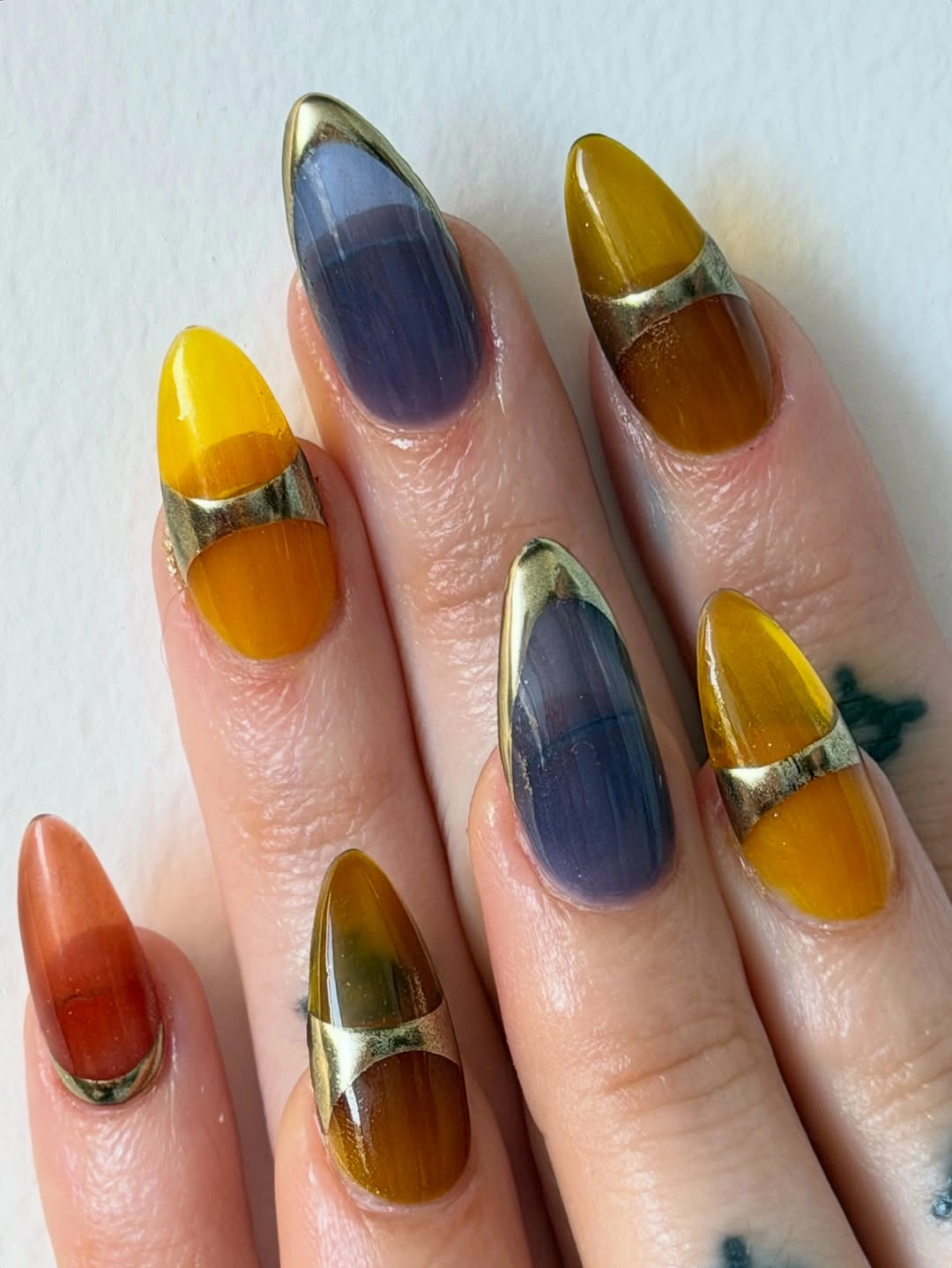
Combining warm mustard and rust with cooler blue-purple tones creates an unexpected fall manicure. The colors can be arranged into clean sections with a narrow contrasting band separating them, giving every nail a structured appearance. I like this concept because the color contrast does most of the decorating work.
The repeated division across the nails creates consistency even when the individual color proportions change. Warm shades bring the autumn feeling, while the cooler center adds depth and keeps the manicure from becoming too predictable. The dividing band acts as a visual break that makes the mixed palette easier to follow.
For a simpler version, I would use the warm-and-cool division on two accent nails and keep the remaining fingers in mustard, rust, or a neutral shade. On short nails, make the sections broader and reduce the number of colors. The cleaner arrangement will keep the graphic concept easy to see.
Blue Graphic Curves Against Pale Pink
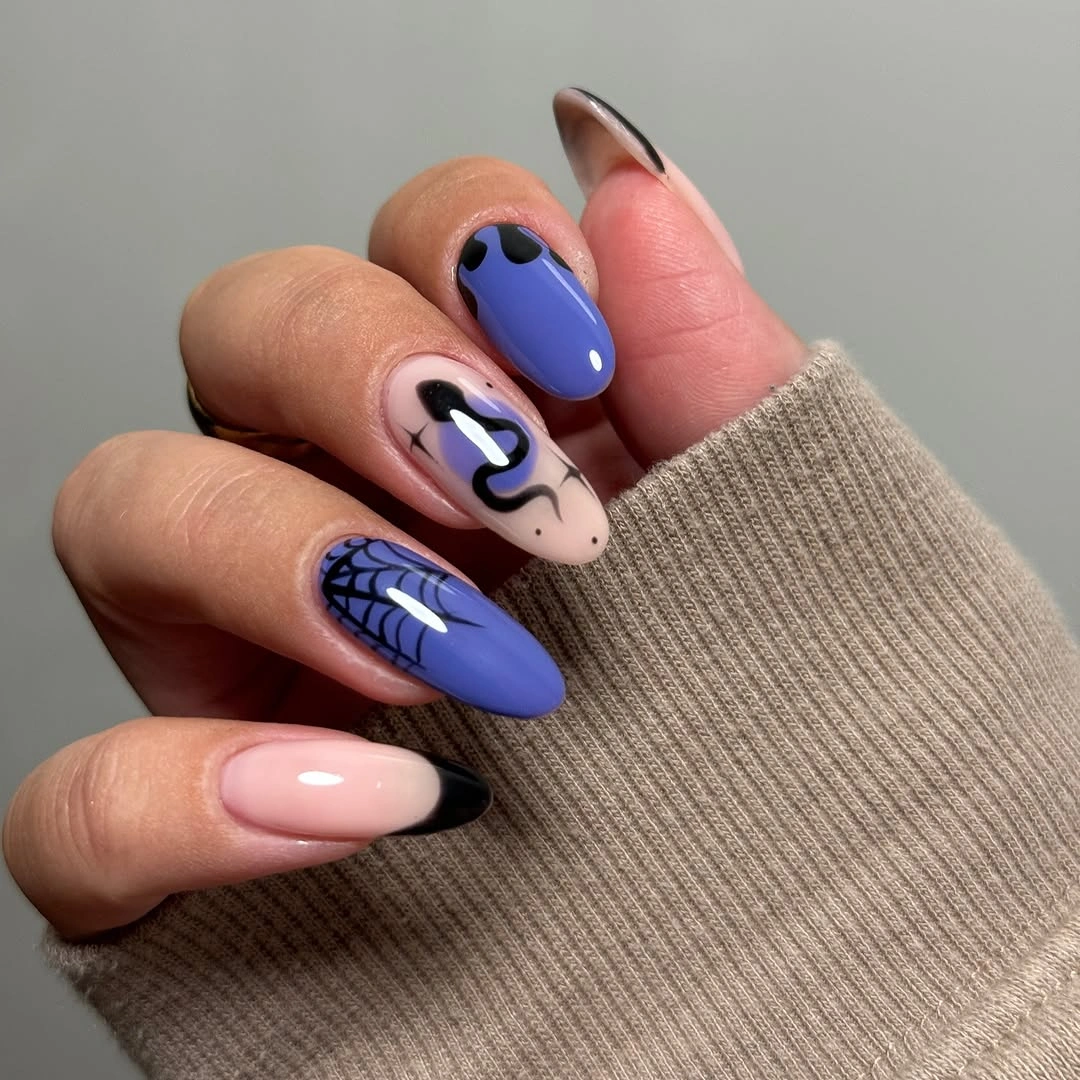
Pale pink provides a soft background for bold blue and violet curved details. The saturated lines can travel across selected nails while leaving plenty of the blush base visible, creating a modern graphic effect without covering the entire manicure. I like this approach when someone wants colorful nail art that still feels light.
The curves should be placed with intention rather than scattered randomly. Some nails can remain almost completely plain while others carry the stronger graphic marks. This difference creates movement across the hand and gives the eye somewhere to pause.
For shorter almond or oval nails, I would simplify the curves into one broad line or accent shape. Keeping the background open will help preserve the elongated appearance of the nail. A small dot or second short line can repeat the blue shade elsewhere without making the design crowded.
Brown Orange Flowers With Tiny Gold Points
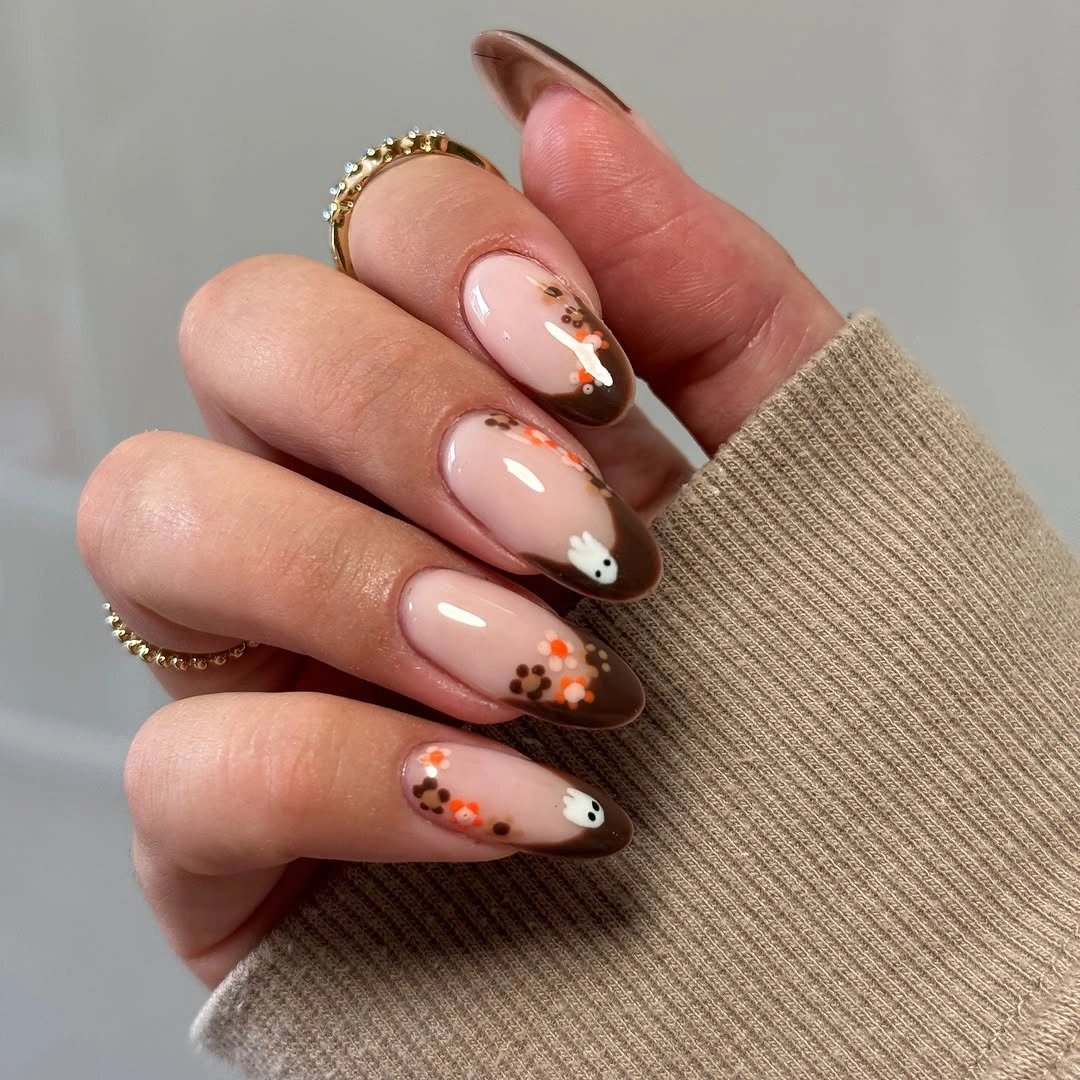
A blush base decorated with brown, orange, and small gold accents creates a softer interpretation of autumn florals. Rather than using large flowers, this style relies on miniature marks that are scattered carefully across the nails. The result feels delicate and seasonal without becoming overly decorative.
Brown provides the definition, while orange introduces the warmth associated with fall. Tiny gold details can catch the light and add a refined finish, but I prefer using them sparingly so they remain highlights rather than the dominant feature.
For shorter nails, choose one or two accent fingers for the floral details and leave the remaining nails sheer blush or warm brown. A single orange flower or leaf can communicate the idea without requiring a complicated illustration. When the surface is small, fewer details usually create a cleaner result.
Warm Accent Clusters On A Nude Base
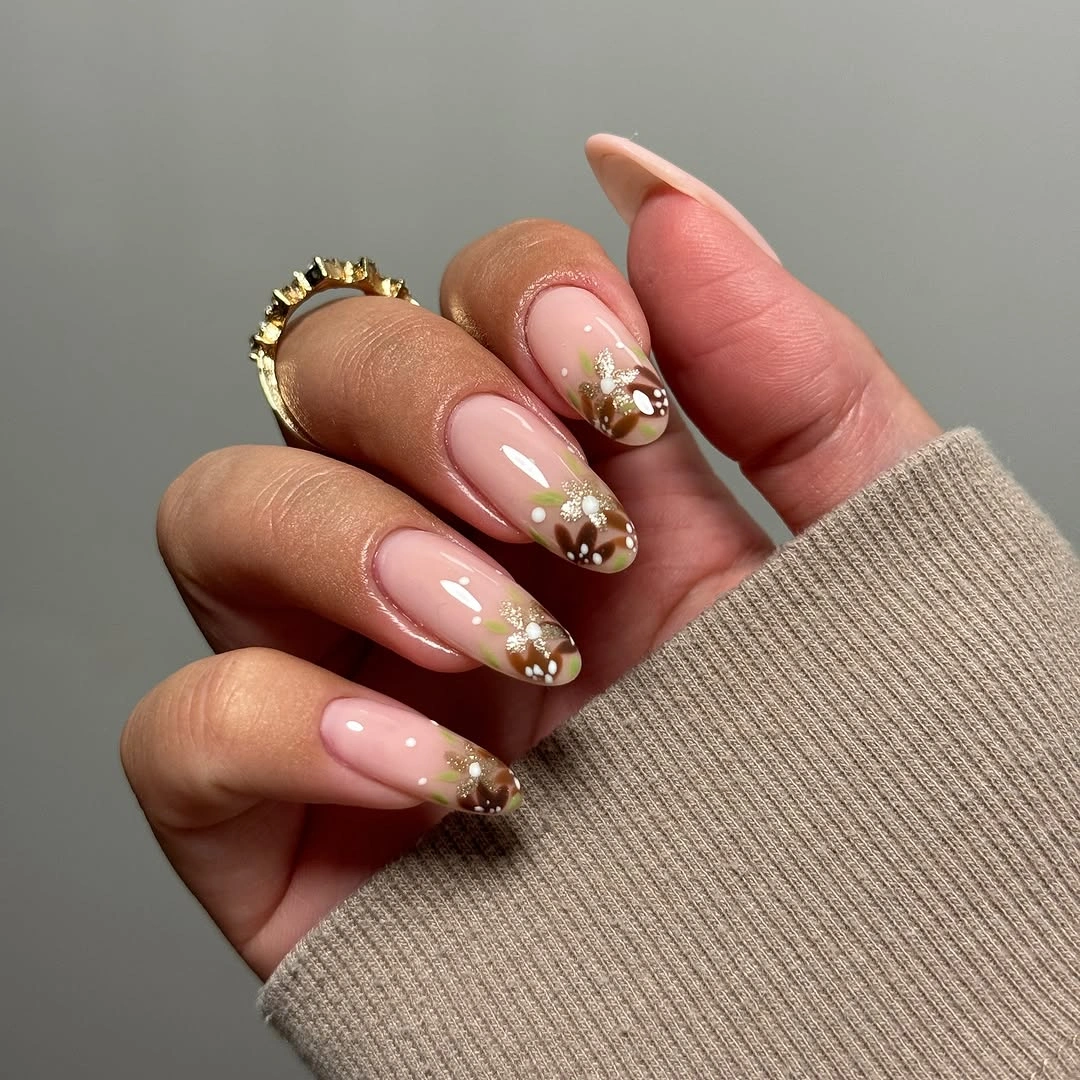
A nude or blush base becomes more interesting when warm autumn details are grouped into small clusters. Brown curves, orange dots, and tiny botanical shapes can sit near the tip or side of selected nails rather than being distributed evenly across the whole surface. This gives the manicure a more edited appearance.
The open center of each nail helps the clusters stand out. Instead of filling the entire nail, the design lets the natural-looking background remain visible, which makes the manicure feel lighter and visually lengthens the nail shape.
For a practical adaptation, keep the clusters on two accent nails and use a single coordinating warm shade on the others. Shorter nails can still carry this concept, but the clusters should contain fewer and slightly larger elements. This will prevent the tiny details from blending into an indistinct patch.
Autumn Colors As A Complete Composition
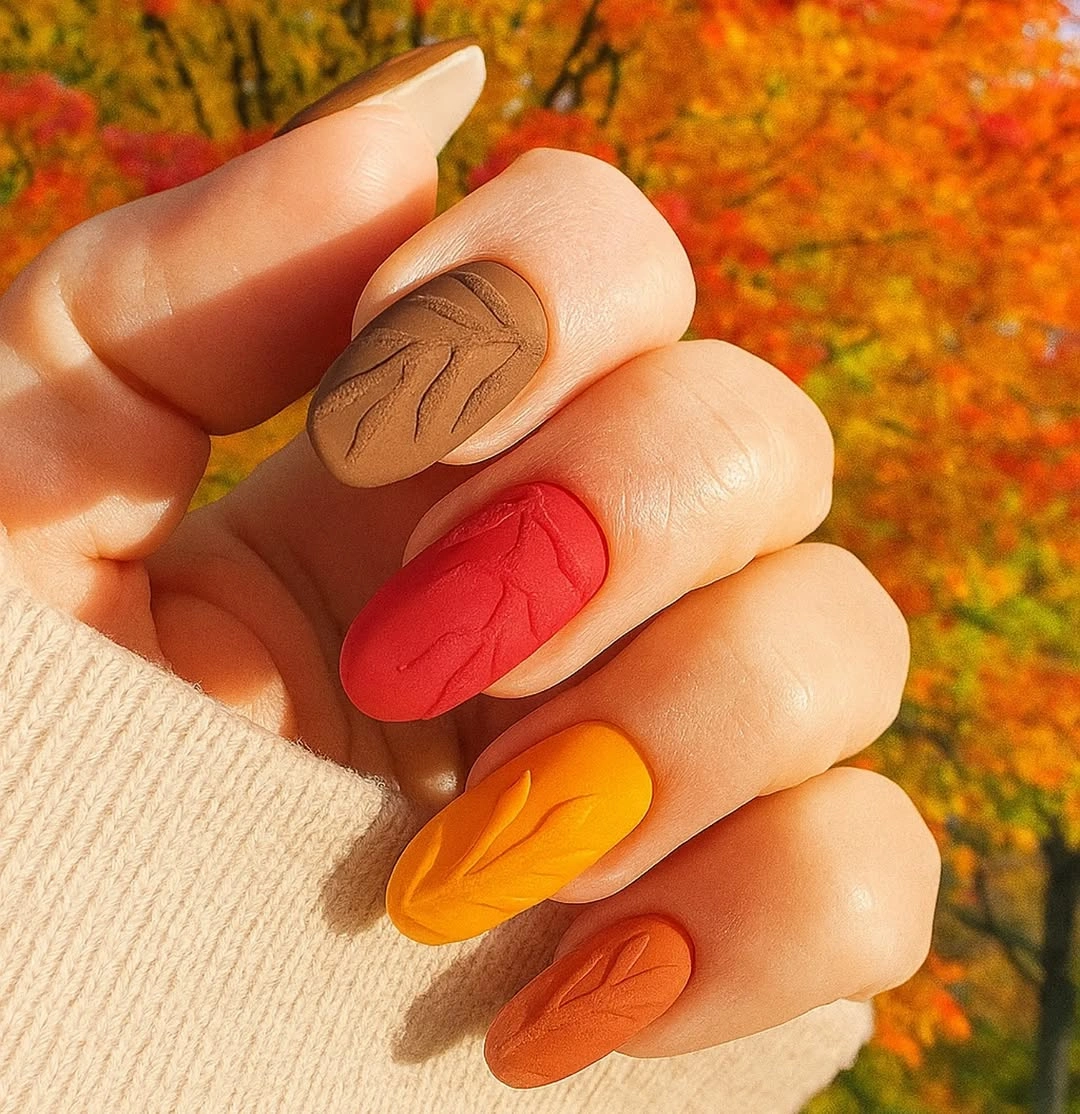
Sometimes the colors themselves are enough to create a strong fall manicure. Alternating orange, red, yellow, and brown across medium almond nails creates a warm seasonal palette without requiring detailed artwork on every finger. I like this approach because it is simple to understand and easy to customize.
The order of the shades can create its own rhythm. Bright yellow and orange bring lightness, red adds richness, and brown provides a deeper anchor. A small leaf or botanical accent can be added to one nail, but the solid colors should remain the main visual feature.
If you prefer a quieter manicure, choose three shades instead of four and include one muted neutral. Shorter nails will make the colors feel more casual, while almond shapes emphasize the elegant progression from one shade to another. The important part is making sure the colors complement rather than compete with one another.
Burgundy And Cream Blocks On Short Nails
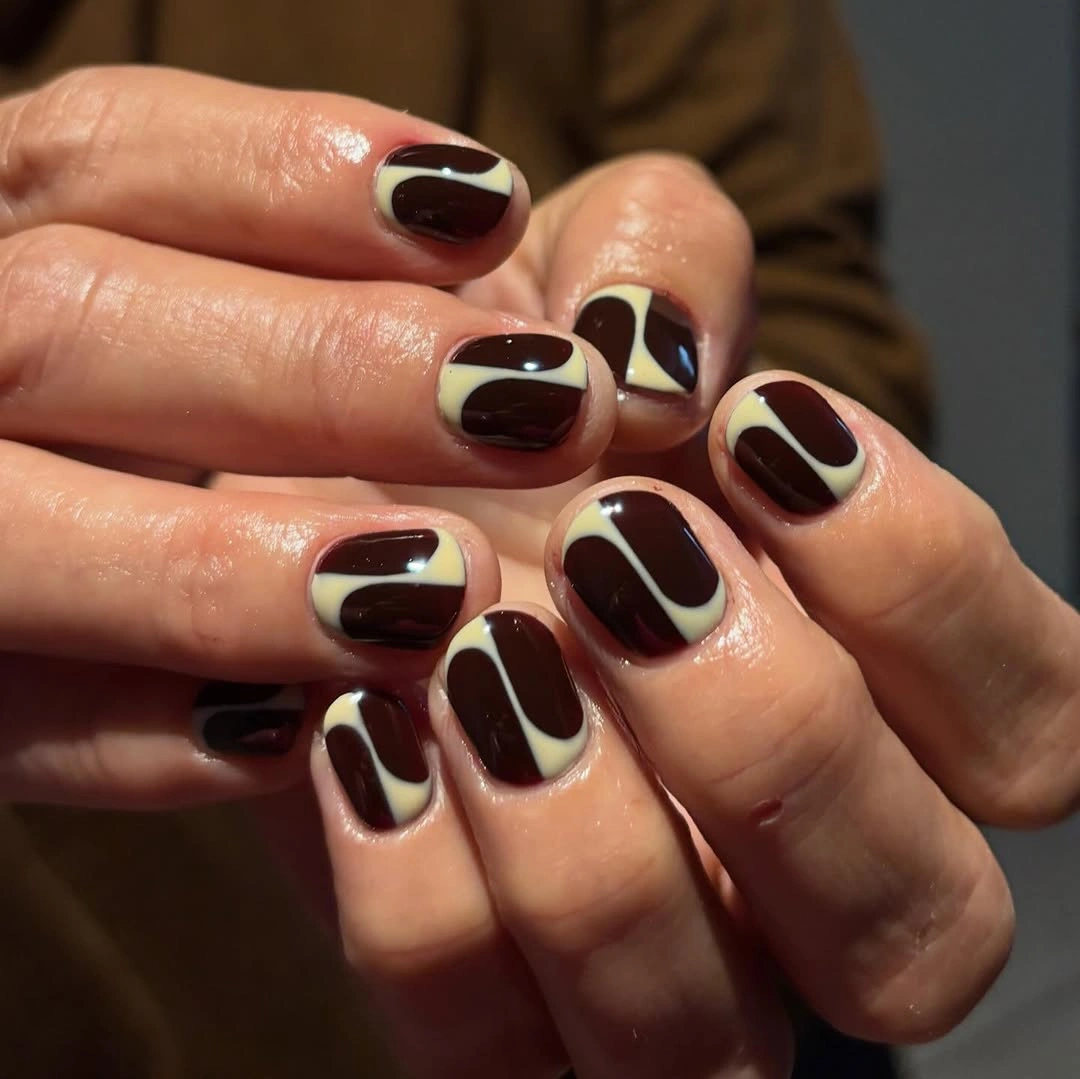
Burgundy and cream create a strong contrast that works particularly well on short rounded-square nails. Instead of a traditional French tip, the two shades can be arranged into curved geometric sections for a more contemporary appearance. The broad shapes remain easy to see even when the nail surface is limited.
The clean boundary between the two colors provides enough visual interest without requiring additional artwork. Burgundy brings the depth and richness associated with fall, while cream softens the overall effect and prevents the manicure from becoming too dark.
For an easier design, use the cream-and-burgundy blocking on two or three nails and keep the others solid burgundy.
Miniature Seasonal Sketches In Open Space
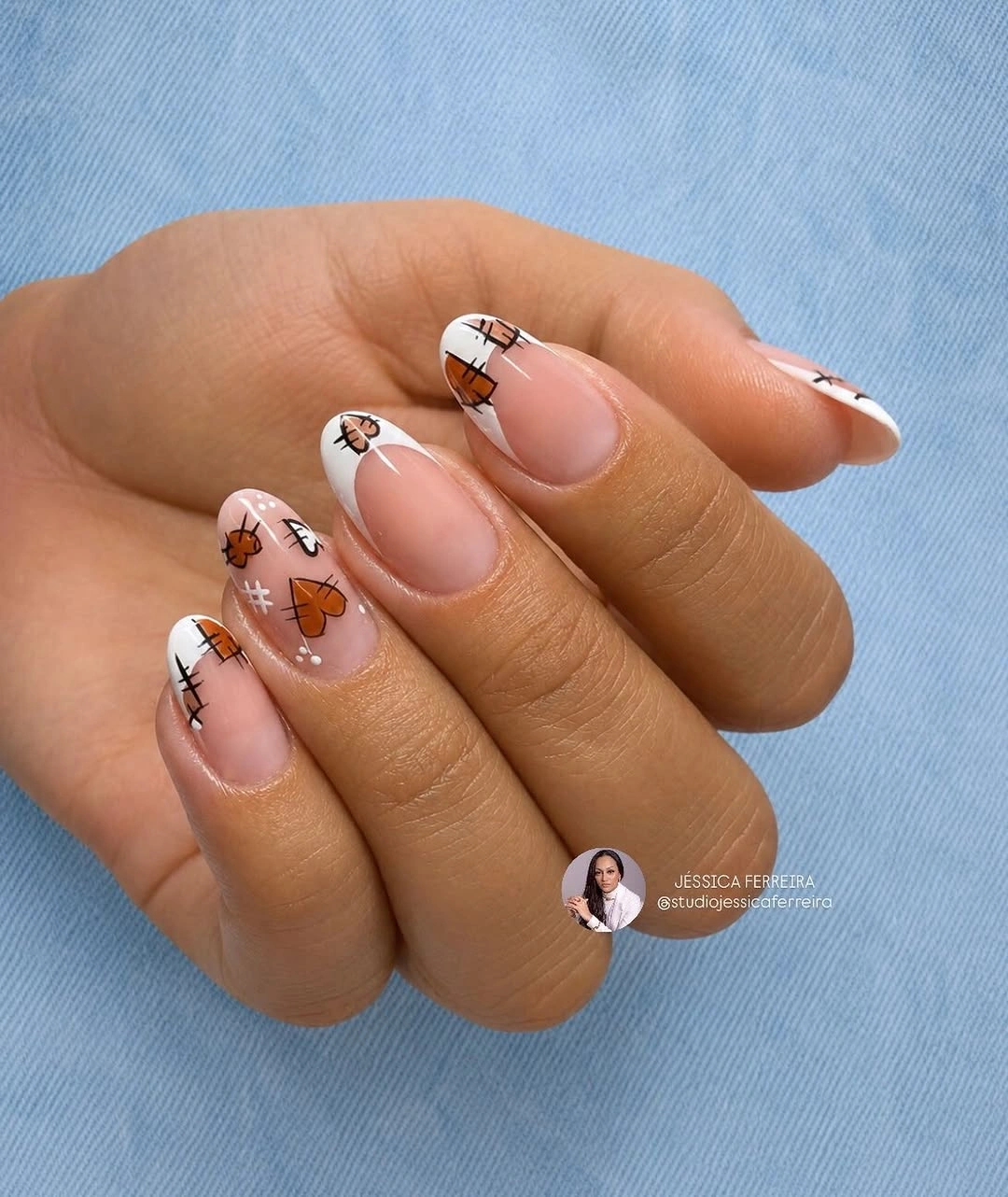
A sheer nude background is ideal for delicate autumn sketches when the goal is a light, detailed manicure. Small leaves, berries, branches, and other seasonal marks can be scattered across medium almond nails while leaving plenty of empty space between them. I love this style because the artwork feels discovered rather than overwhelming.
The pale base is an active part of the composition. It separates each tiny drawing and gives the manicure enough visual breathing room to stay elegant. The almond shape also gives the small botanical marks a little extra vertical space.
For shorter nails, choose one main motif and enlarge it slightly rather than trying to reproduce several tiny illustrations. A single leaf or berry accent can be enough to establish the fall theme. The fewer details you use, the more important contrast becomes, so choose shades that remain clearly visible against the base.
Soft Pink With One Pale Floral Accent
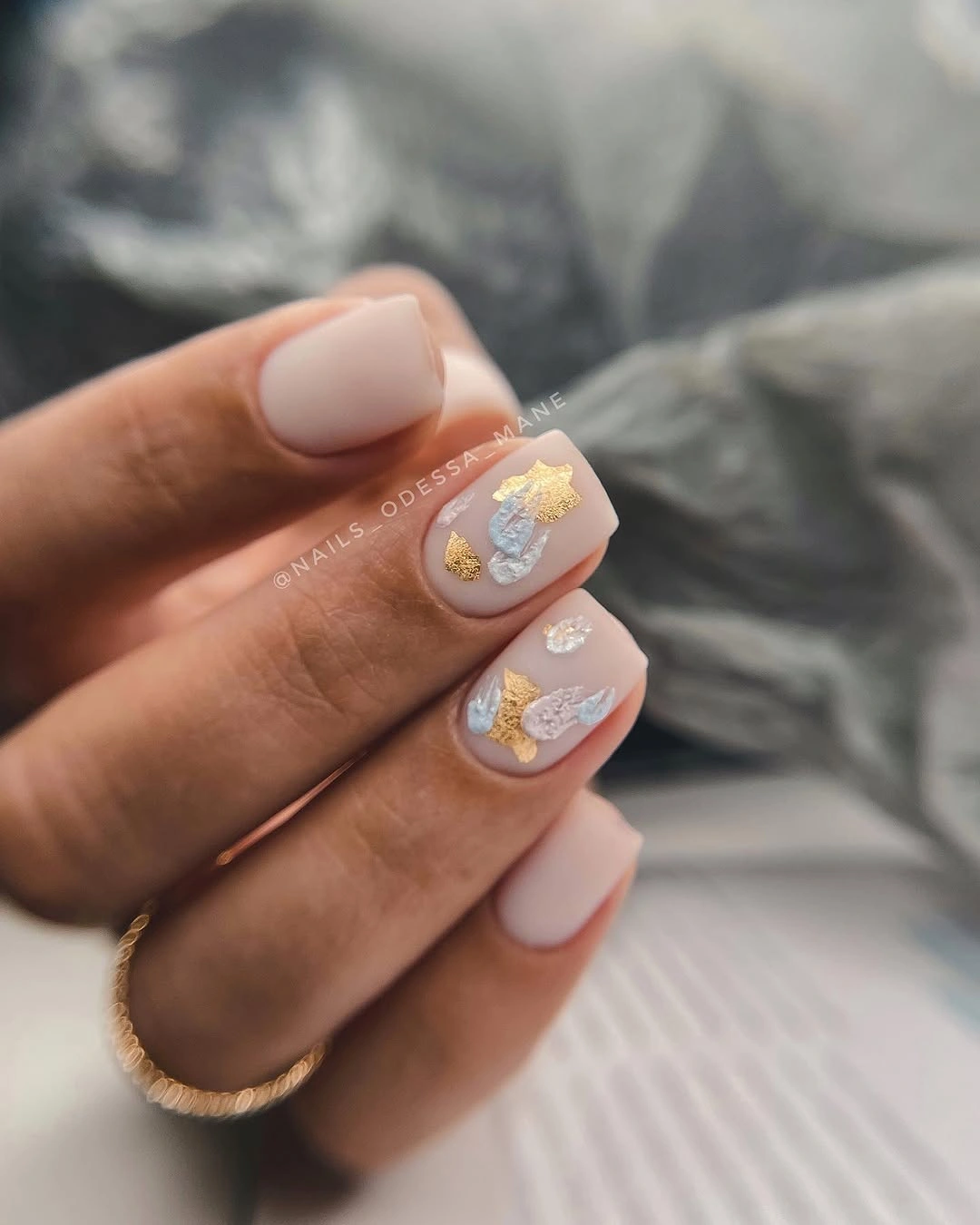
Soft pink is a beautiful choice for a subtle floral manicure, especially when the flowers are created in a lighter shade rather than a strong contrasting color. Selected accent nails can feature pale petals and tiny warm details while the remaining fingers stay almost completely clean.
The low-contrast relationship between the base and floral design creates a gentle, almost dimensional effect. Instead of immediately drawing attention, the flowers become visible as the light catches the different tones. Small gold accents can add warmth without changing the quiet mood.
For everyday wear, I would place the floral detail on only one or two nails. Short rounded nails work especially well because the soft pink and pale flowers keep the manicure neat and understated. If the contrast is too subtle, a slightly darker outline can help the petals remain visible.
Pale Yellow With Olive Loop Details
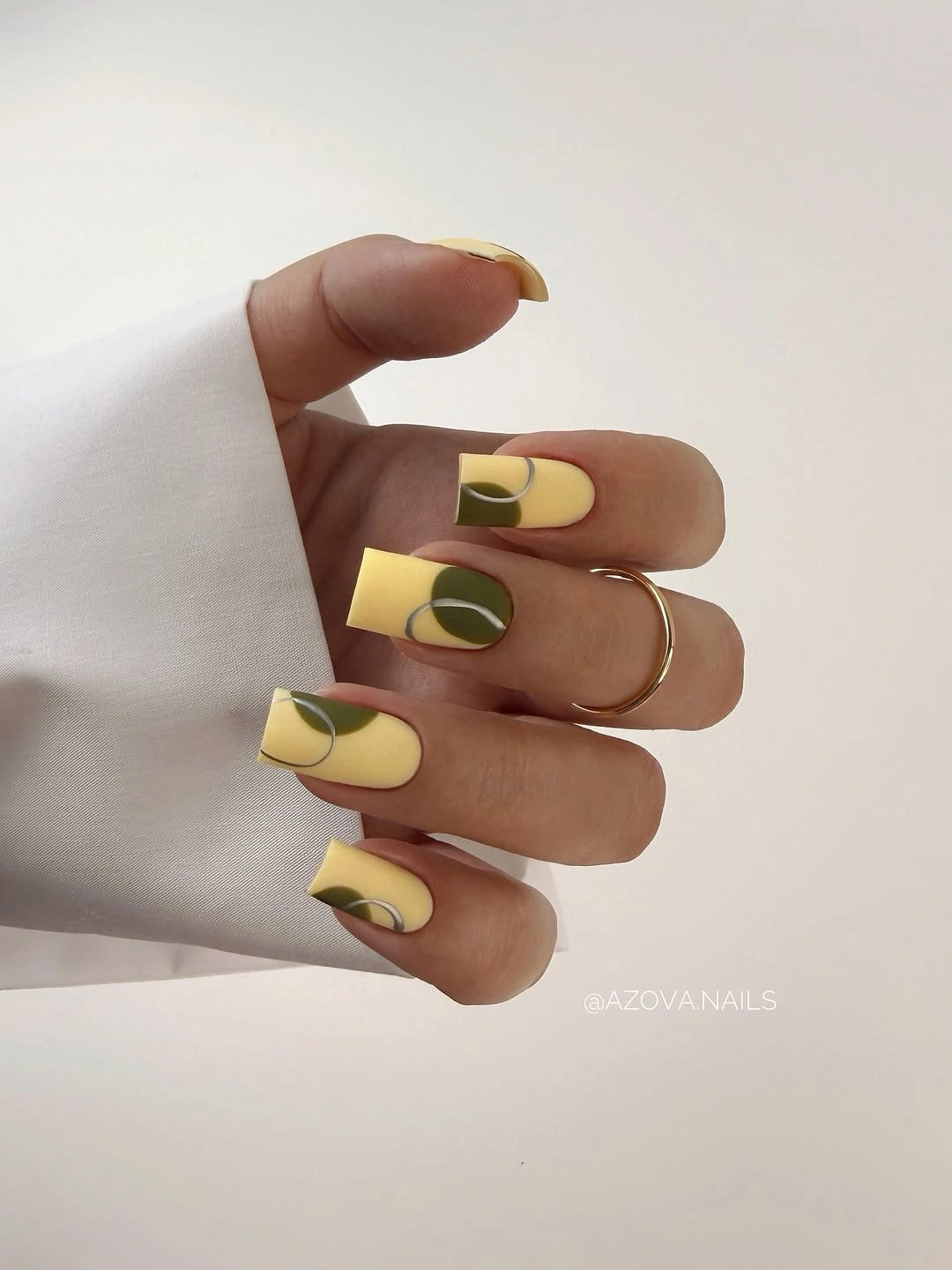
Pale yellow creates a warm but unexpected foundation for olive and brown abstract details. Broad curved loops can be placed across selected nails, creating a graphic pattern that feels organic without looking like traditional floral art. The muted palette makes this design particularly easy to pair with neutral fall clothing.
The olive lines provide depth against the soft yellow base, while brown can add a little extra definition. Because the loops are broader than fine linework, they remain recognizable and maintain their shape across the nail.
For a shorter manicure, simplify each loop into one wide curved mark and use it on an accent nail. Keep the remaining nails pale yellow or olive to maintain continuity. The muted palette is intentionally understated, so it works best when the goal is a sophisticated seasonal manicure rather than a high-impact statement.
Botanical Layers On A Light Ground
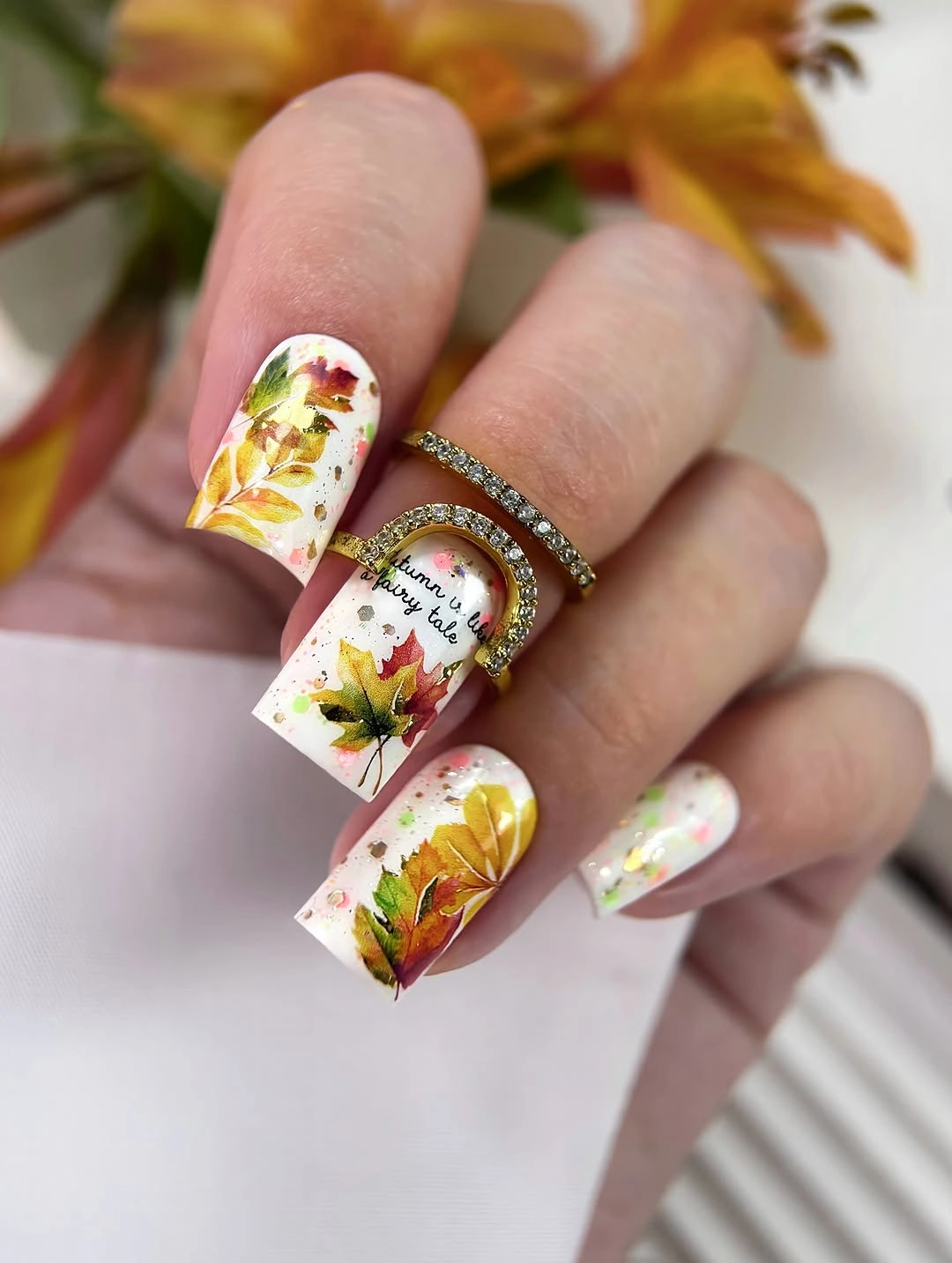
A light base can support a surprisingly detailed botanical manicure when the leaves are arranged in layers. Yellow, green, and brown shapes can overlap across long square nails, creating the feeling of pressed foliage or a miniature autumn collage.
The light background prevents the layered colors from becoming too heavy. Leaving small spaces between the botanical shapes also helps each leaf remain identifiable instead of turning the artwork into one large mass of color. The longer square shape provides a stable frame for the detailed composition.
For shorter nails, I would reduce the number of leaves and choose one larger botanical cluster for an accent finger. Repeating the same yellow and green shades on plain nails will keep the set connected. The most important adjustment is reducing density rather than trying to squeeze the entire original composition onto a smaller surface.
Translucent Orange With Dark Branch Lines
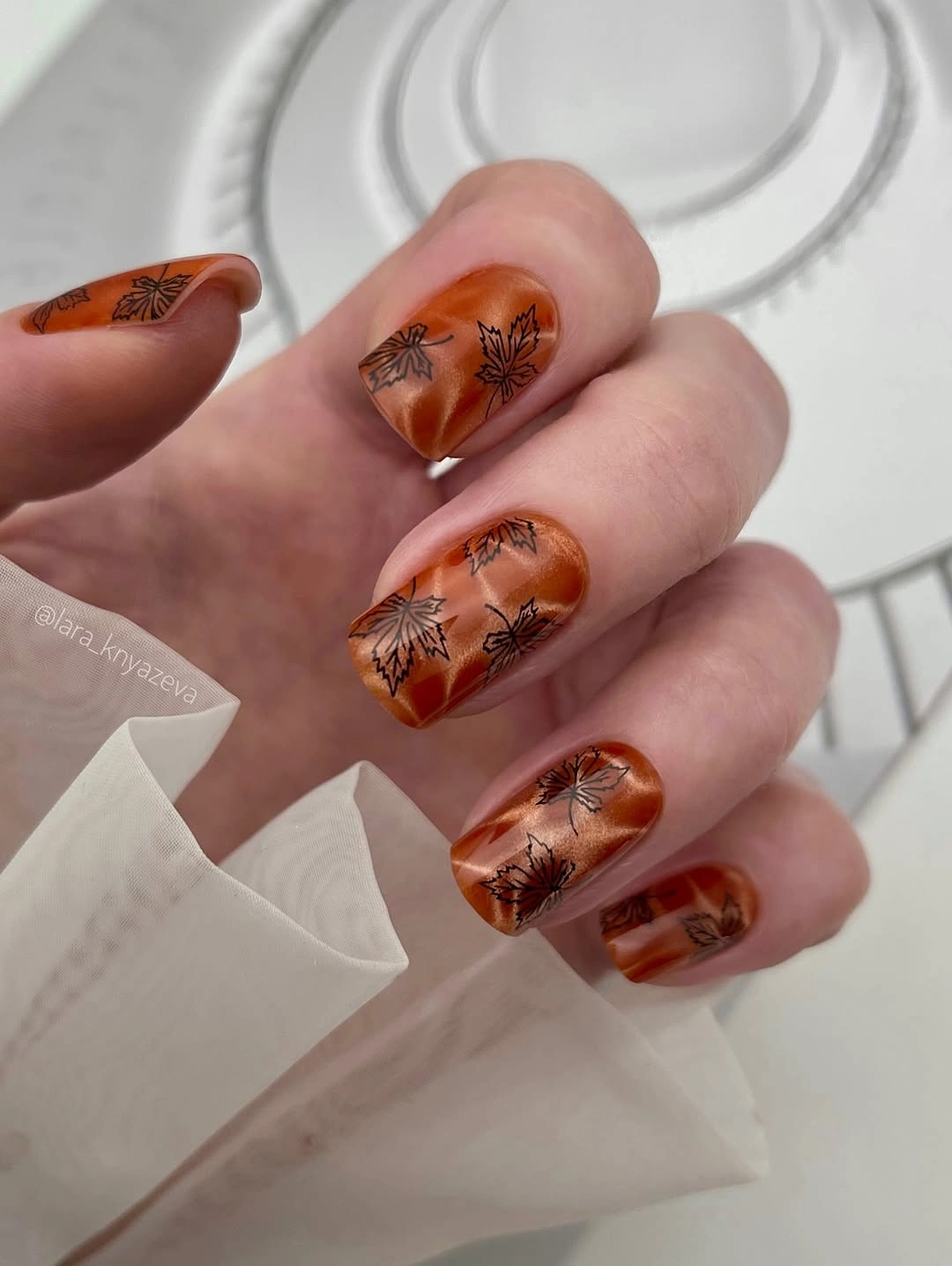
A translucent-looking orange base creates a warm, glowing foundation for dark botanical linework. Branches and leaves can be drawn across the surface in black or deep brown, allowing the orange to remain visible between the lines. The combination feels distinctly autumnal while still looking modern.
The botanical lines should have enough space between them to maintain their shape. Because the base already provides a strong color statement, the dark artwork does not need to cover every section of the nail. A few carefully placed branches can create more impact than a dense collection of tiny marks.
For shorter nails, simplify the artwork to one broad branch or leaf on an accent finger. Keep the rest of the nails in the translucent orange or a coordinating neutral. This preserves the warm seasonal mood while making the design easier to read and maintain.
Orange Focal Nail With Deep Green Support
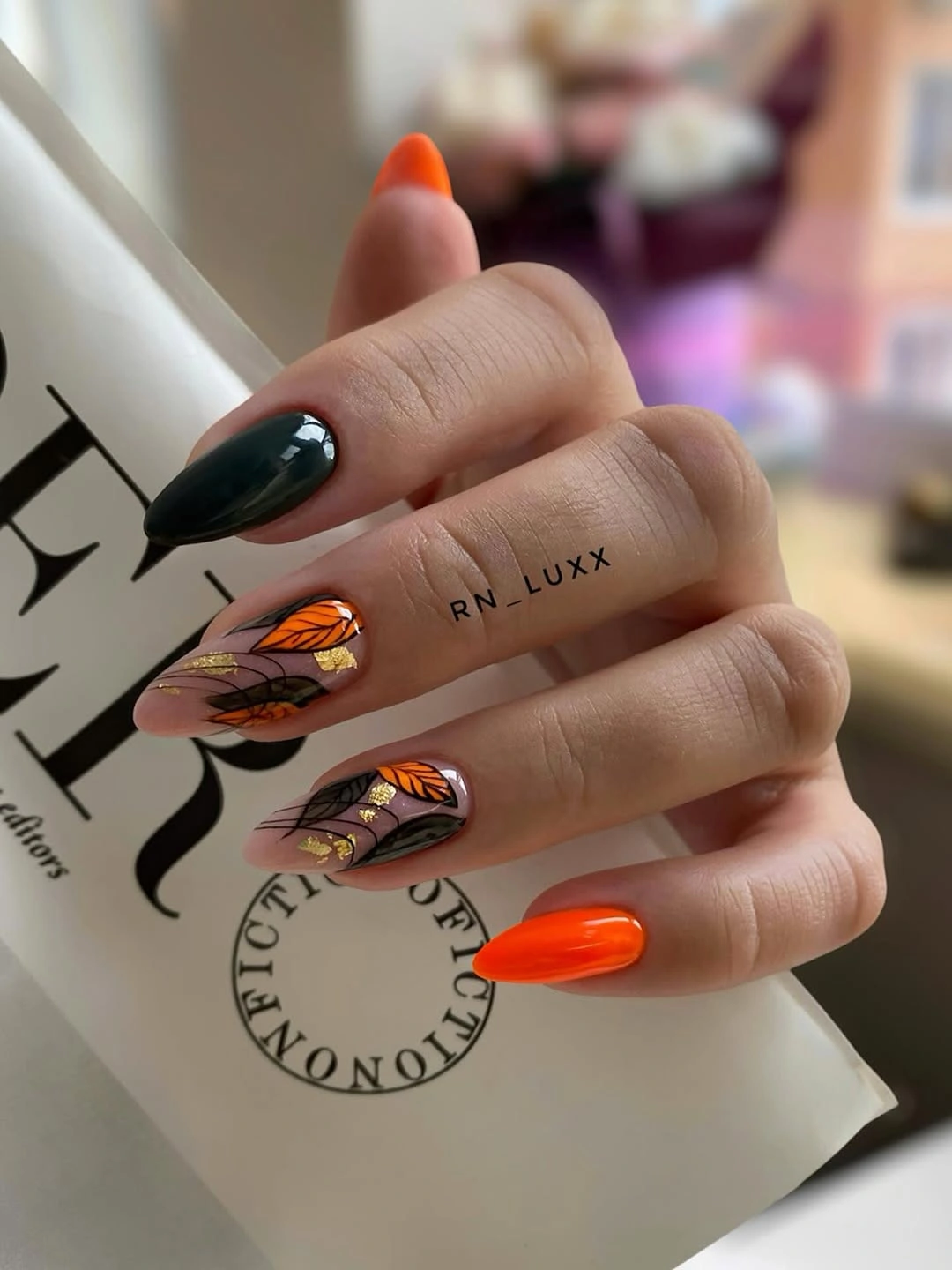
A bright orange accent nail can become the focal point of a manicure when it is surrounded by deeper green and black shades. I like this arrangement because the orange immediately catches the eye while the darker colors provide balance and keep the overall manicure from feeling too bright.
The color hierarchy is what makes the design work. Orange appears most strongly on one nail, while the darker shades create support across the remaining fingers. Small warm details can echo the focal shade without competing with it.
For a more wearable version, move the same palette onto medium almond nails and keep the orange concentrated on one accent finger. One or two dark graphic lines can repeat the direction of the design. Shortening the shape will make the manicure more practical while keeping the bold seasonal color story.
Red Orange And Monochrome Graphic Contrast
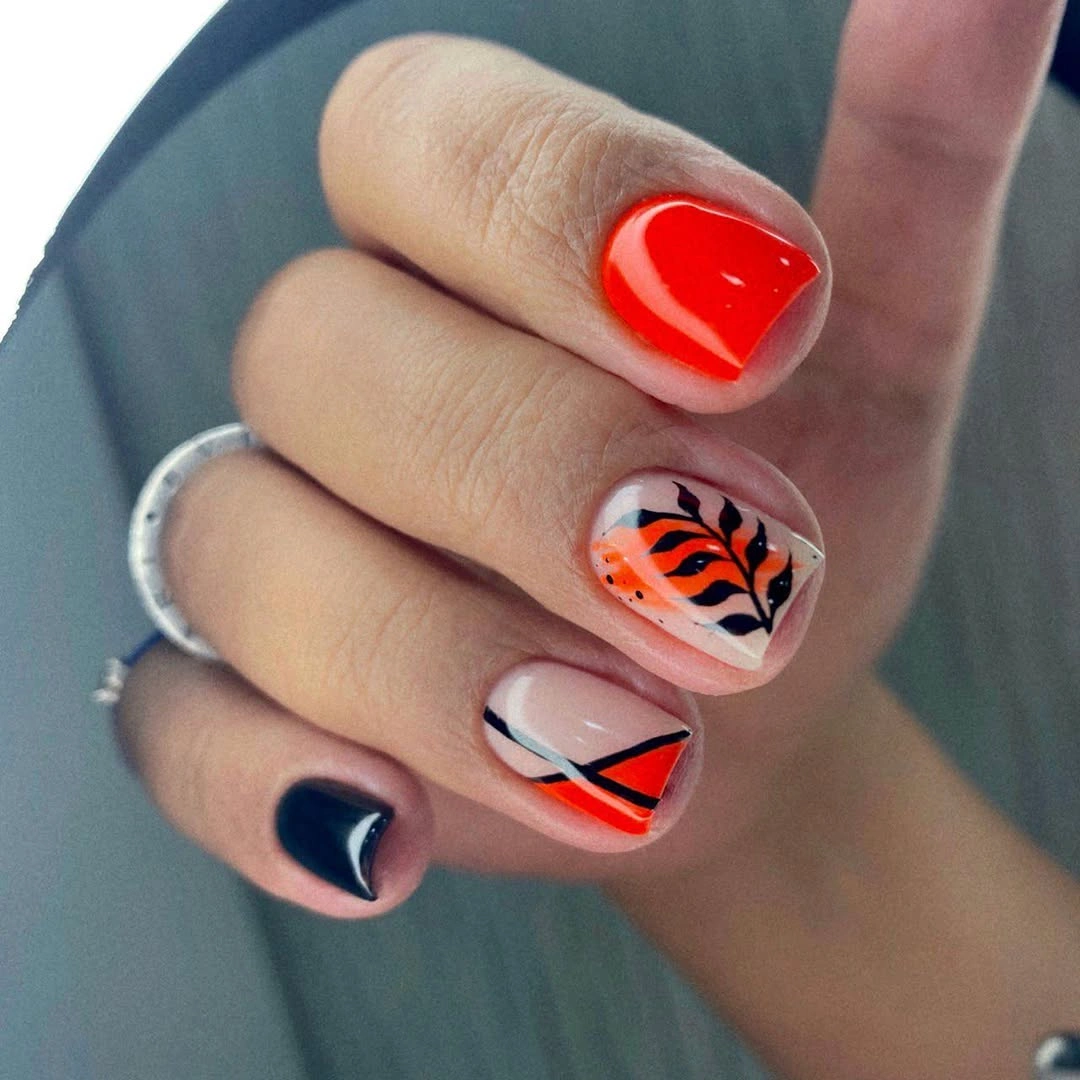
Red-orange brings immediate warmth to a manicure, while black and white graphic details create a sharp contrast. On short rounded nails, one or two solid warm nails can be paired with striped or abstract black-and-white accents for a playful mixed design.
The variety works best when every nail has a different role. One carries the strongest color, another provides graphic pattern, and another remains comparatively simple. This prevents the manicure from becoming visually crowded even though several design elements are present.
For a cleaner everyday version, choose either the striped detail or the abstract linework rather than using both. Broad patterns work better on short nails because they remain recognizable from a normal viewing distance. The warm red-orange shade can then provide enough seasonal character on its own.
White Nails With One Zebra-Like Accent
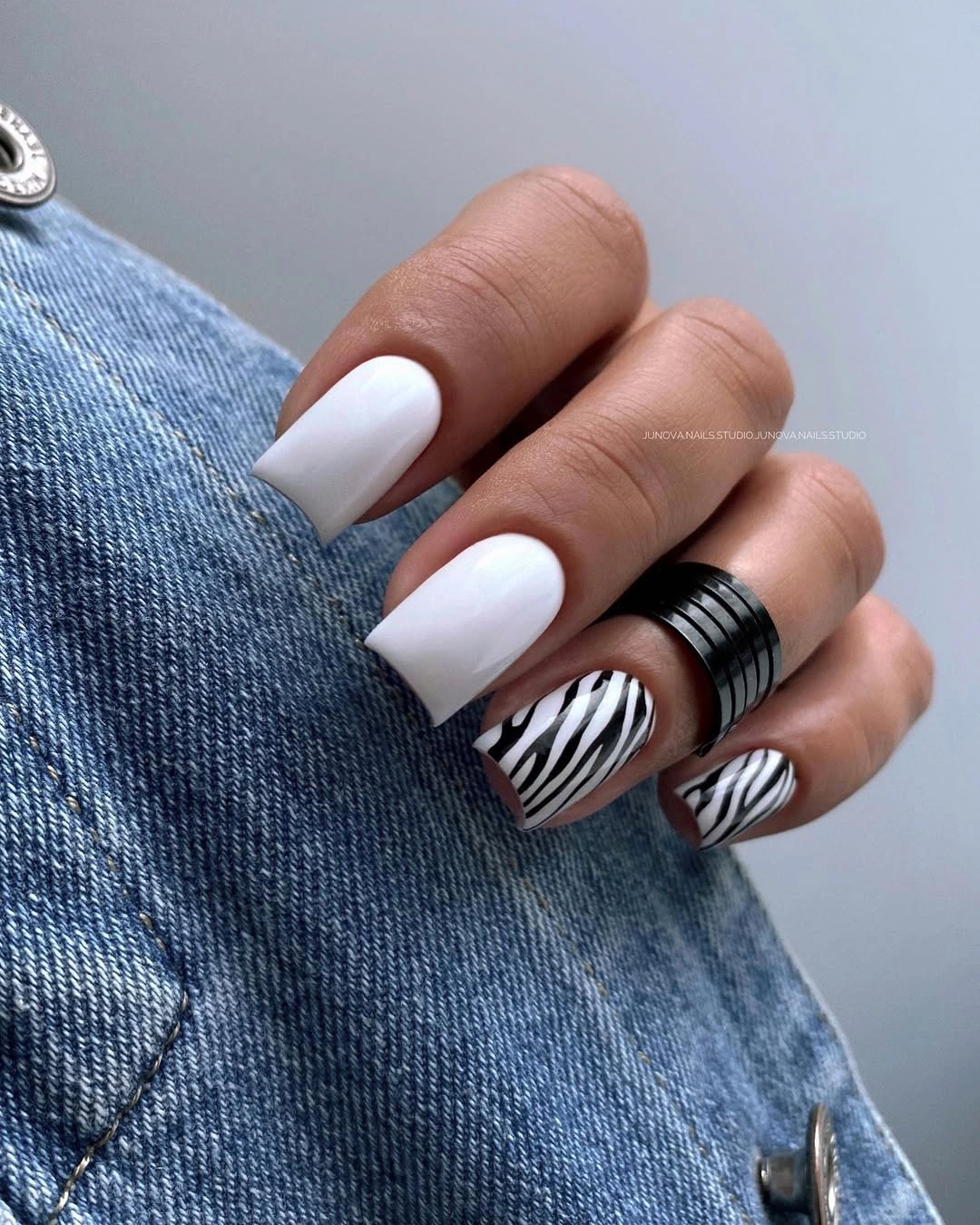
A clean white manicure can become much more interesting with one dark striped accent nail. The mostly solid white surface creates a bright, minimalist foundation, while the black-and-white pattern immediately becomes the focal point.
The strength of this idea comes from restraint. Because most of the nails remain plain, the patterned finger has plenty of visual importance without needing bright colors or additional decorations. The contrast also works beautifully with a long square nail because the straight edges make the pattern feel crisp.
For a softer autumn version, replace the black with deep brown. On shorter nails, use fewer and slightly wider stripes so the pattern remains clear. Keeping the rest of the manicure clean will preserve the one-accent effect and prevent the design from becoming too busy.
Short Mismatched Nails With Miniature Art
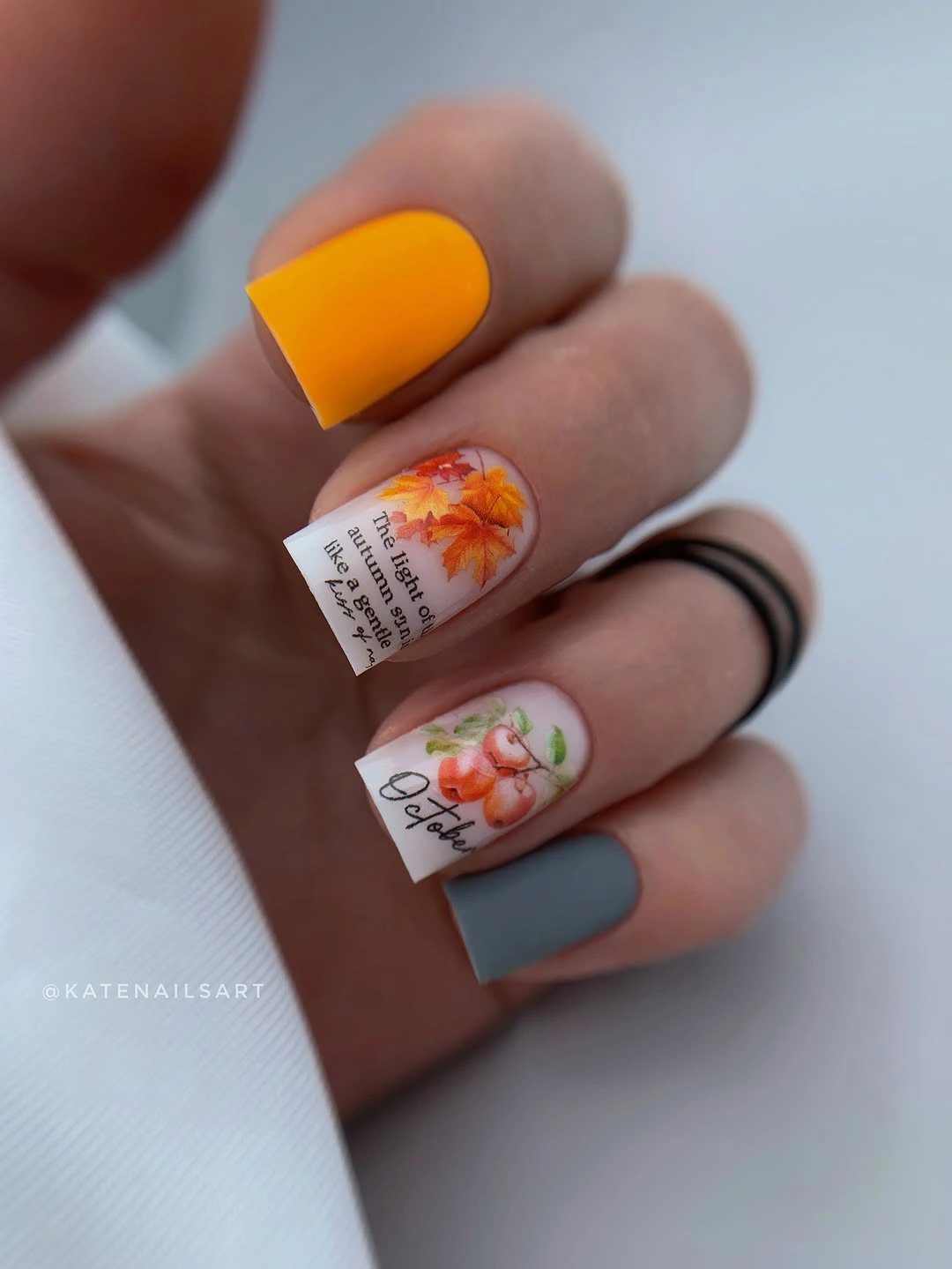
Short square nails can handle a playful mix of orange, gray, white, and tiny autumn illustrations when the colors are carefully coordinated. Solid orange provides warmth, gray introduces a muted neutral, and white creates space for the small artwork to remain visible.
The most important part is the balance between decorated and undecorated nails. Not every finger needs an illustration. The plain colors create pauses that allow the small seasonal details to stand out without making the manicure feel crowded.
For a simpler version, choose one warm solid shade, one neutral, and one illustrated accent nail. Keep the artwork broad enough to remain recognizable on the shorter surface. This approach gives you the personality of mismatched fall nail art while keeping the final manicure clean, wearable, and easy to maintain.