
When I work with short nails, I always start with the shape before thinking about decoration. A compact coffin silhouette has limited space, so a clean tip, a narrow curve, or one strong color can have more impact than several crowded details. The best fall short coffin nails designs feel intentional from every angle while remaining practical for everyday wear.
I also look closely at how much empty space the nail design leaves behind. Keeping the center relatively open helps short nails look neat and gives each accent room to stand out. After years of creating polished manicure looks, I have found that the strongest designs are usually the ones that can be simplified without losing their main character.
Pink Square Nails with Black Curved Corners
A translucent pink base creates a soft background for narrow black sections placed around the tips and outer corners. White curved strokes interrupt the dark areas, giving each nail a graphic appearance without covering the entire surface. The contrast makes the compact shape look crisp while keeping the manicure light.
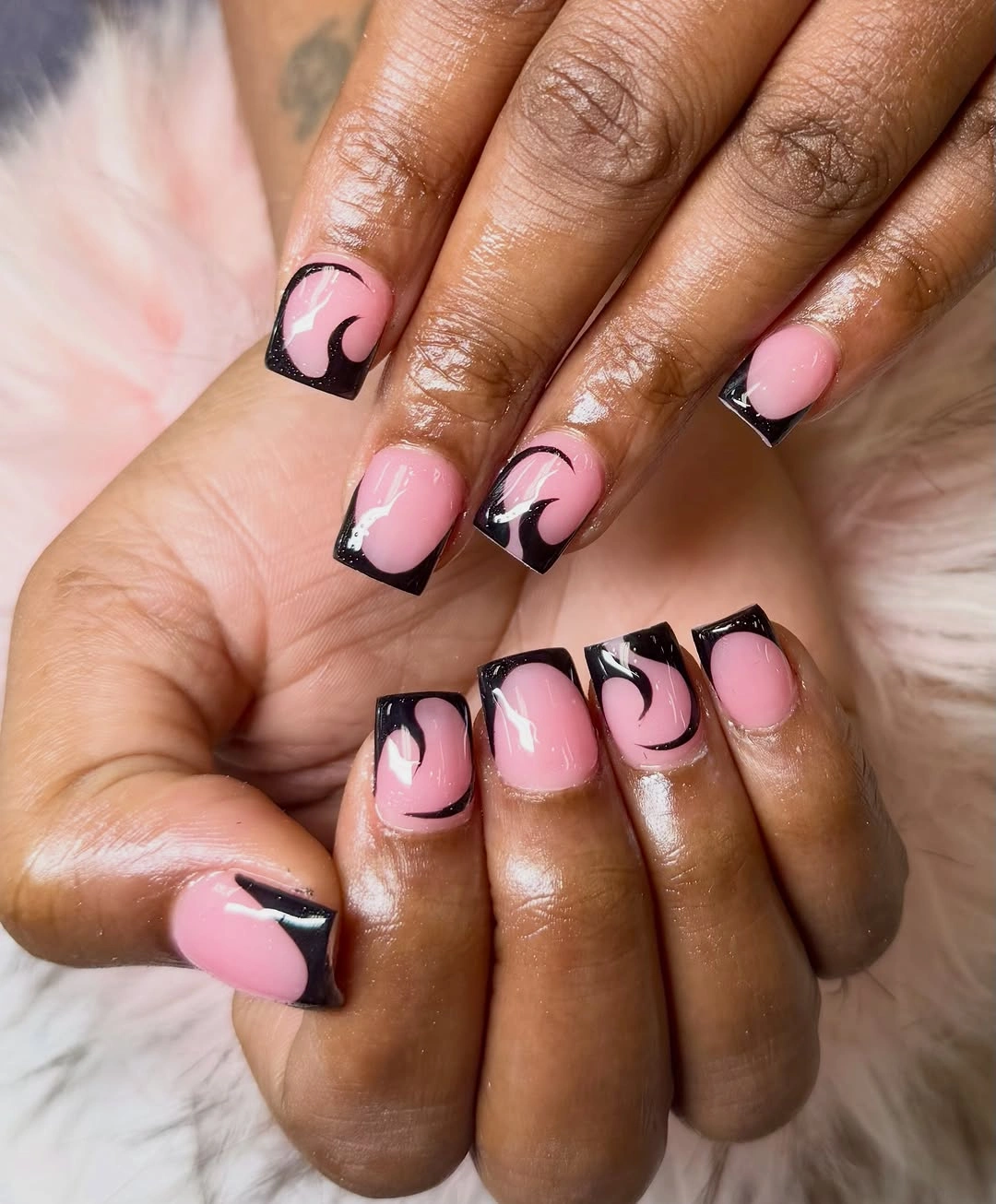
I would keep plenty of pink visible between the dark border and cuticle. That open area helps the curves remain clear and prevents the black from making the nails appear smaller. On very short nails, using one dark corner instead of two can make the design easier to maintain.
The stronger the contrast, the more noticeable any uneven edge becomes. A slim black section is therefore easier to wear than a thick one, especially on a small nail plate. Charcoal can also soften the effect while preserving the same graphic structure.
Playful Yellow and Burgundy Patchwork Tips
This manicure uses several colors across different nails, including warm yellow, burgundy, pink, and black. Stripes, dots, and small tip patterns give every nail its own identity, but the details remain relatively small so the short shape does not look overwhelmed.
I like the idea of repeating one detail across multiple nails instead of making every pattern completely unrelated. For example, a few burgundy dots can appear alongside yellow stripes while the remaining nails stay mostly pink.
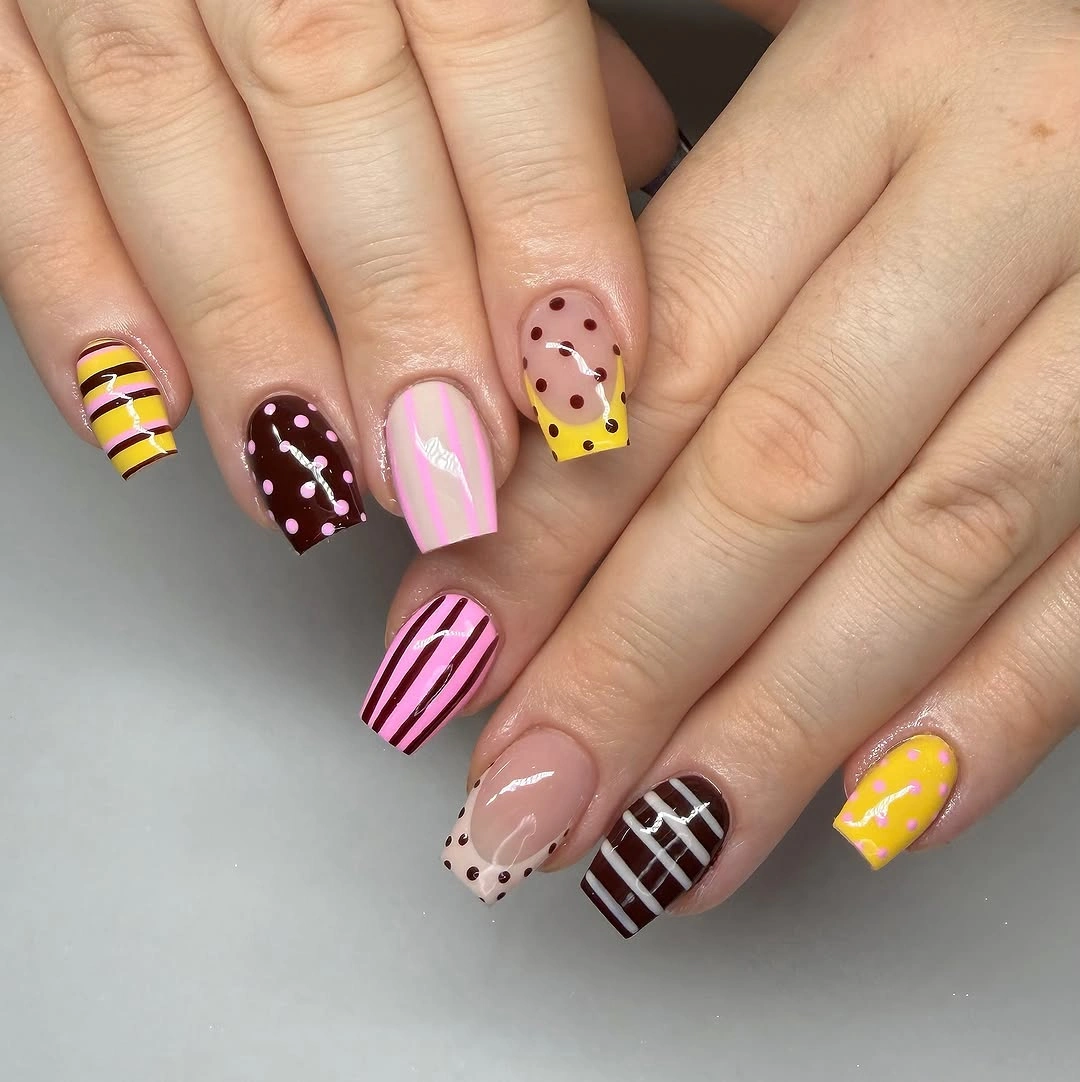
Patchwork nail art does not require perfect symmetry, but the color balance still matters. I would choose two main shades and use the third as an accent if I wanted a more refined result. That keeps the manicure playful without making it feel visually chaotic.
Navy Angles on a Soft Pink Coffin Shape
A soft pink base gives these nails an airy foundation, while deep navy appears in angular sections around the tips. Fine white lines follow the dark shapes, creating a layered geometric effect that adds movement to the compact silhouette.
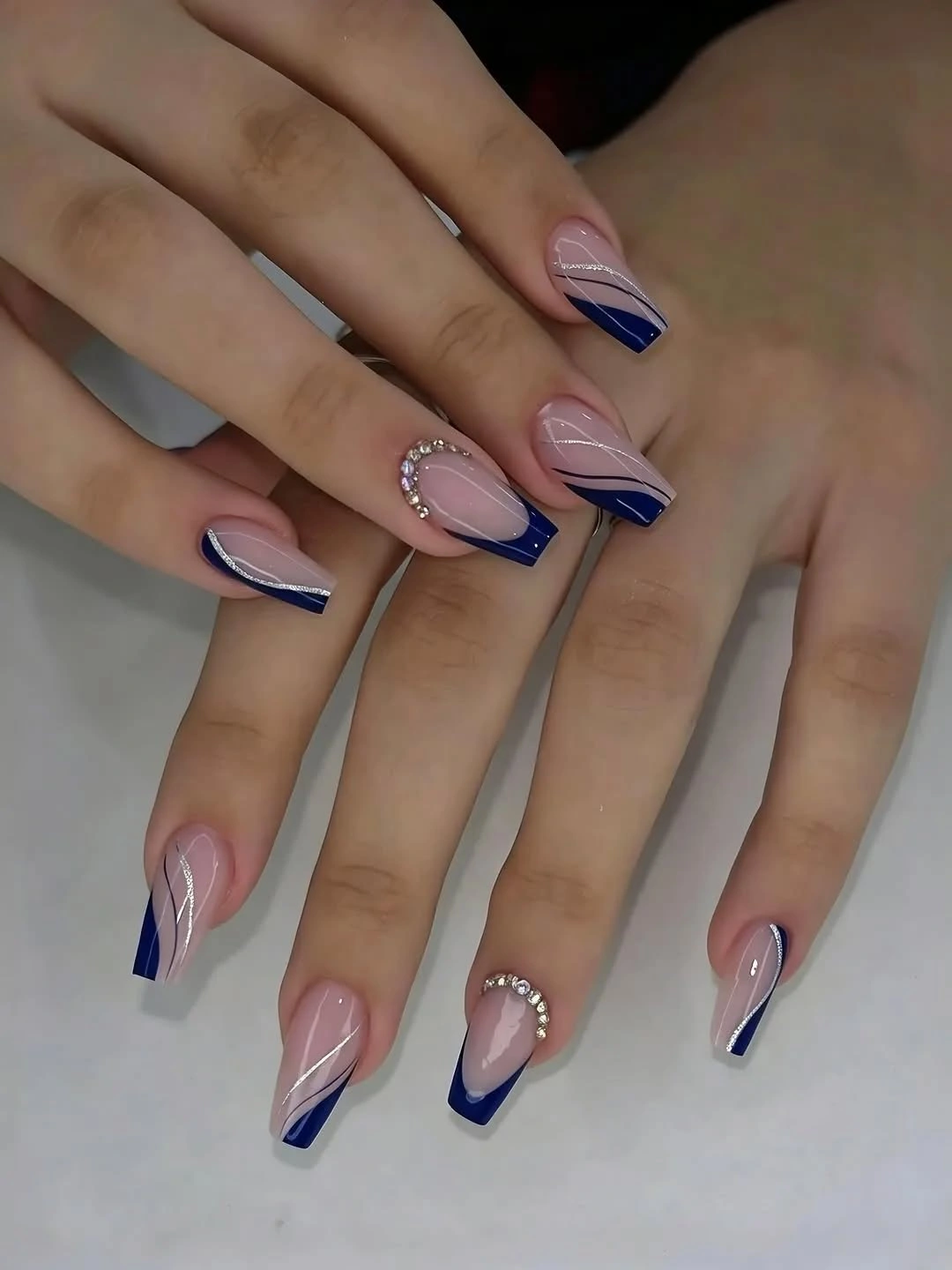
The untouched pink center is what keeps the manicure balanced. I would preserve that open space rather than extending the navy too far toward the cuticle. On very short nails, the navy could be limited to two accent fingers while the others receive a narrow side detail.
Angular dark tips need clean application because their edges are highly visible. A smaller navy wedge works better when the nail plate is particularly short. Removing decorative stones would also make the look more suitable for everyday wear.
Clean Pink Nails with a White Micro-French
A sheer pink base combined with extremely slim white tips creates a refined manicure with almost no additional decoration. The clean center and narrow edge allow the short square shape to remain the focus rather than trying to disguise its natural proportions.
I like this style when the goal is something neat and versatile. If the nails are very short, the white line should become even thinner so the pink remains dominant. A slightly varied line on one accent nail can add personality without changing the overall simplicity.
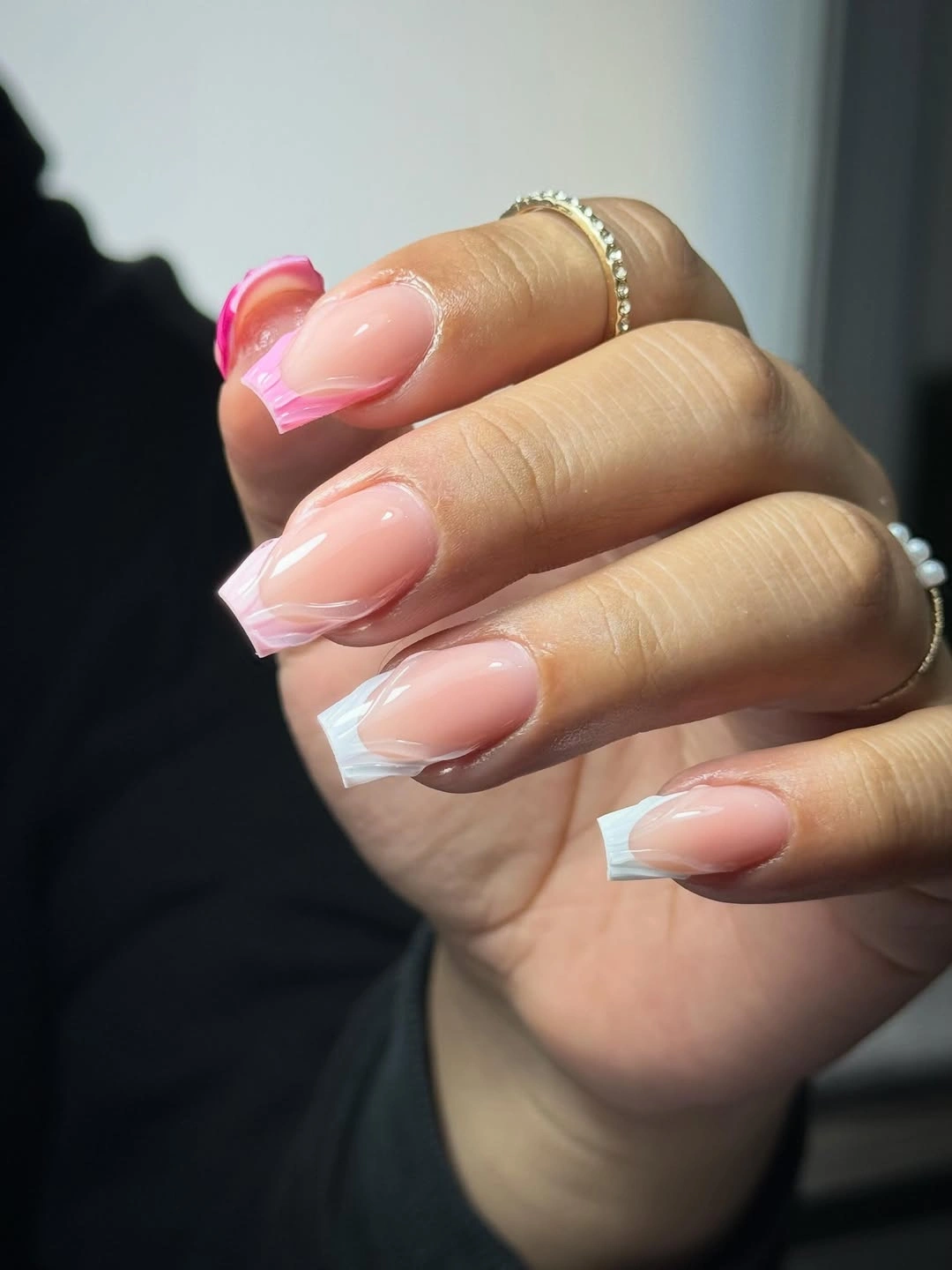
Minimal nail art still depends heavily on precision. The pale base can reveal uneven filing, while the white edge makes small chips obvious. The benefit is that there are fewer details to repair, so refreshing the tip line can quickly restore the complete look.
Blue Dotted French Tips on Pink Squares
Soft pink nails receive pale blue French sections along the tips, with tiny blue dots adding detail around the colored edge. The combination feels fresh because the dots break up the solid tip without covering the clear pink center.
I would place the dots close to the blue border instead of scattering them across the nail. This keeps the manicure open and creates a smooth transition between the two colors. On the shortest nails, fewer dots will make the design easier to read.
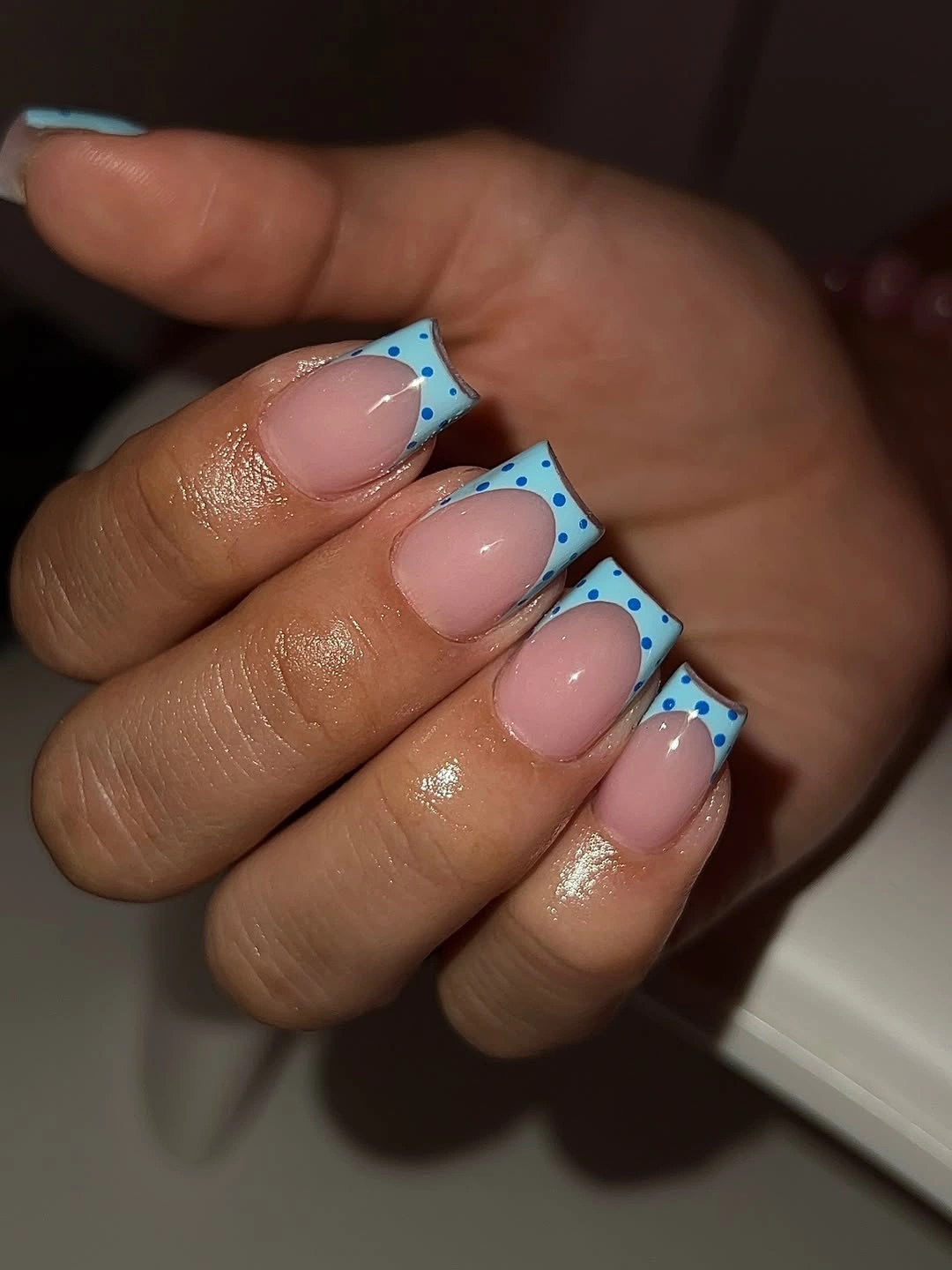
The exact blue shade can change the mood considerably. A muted dusty blue feels softer and more appropriate for a subdued autumn palette, while a brighter blue gives the manicure a playful finish. Either way, the tip should remain narrow enough to preserve the compact shape.
Neon Green Meets Translucent Brown Pattern
Bright green brings a dramatic color statement to this manicure, while translucent brown sections introduce a softer mottled texture. Some nails use the neon shade more heavily, while others combine it with irregular brown patches for contrast.
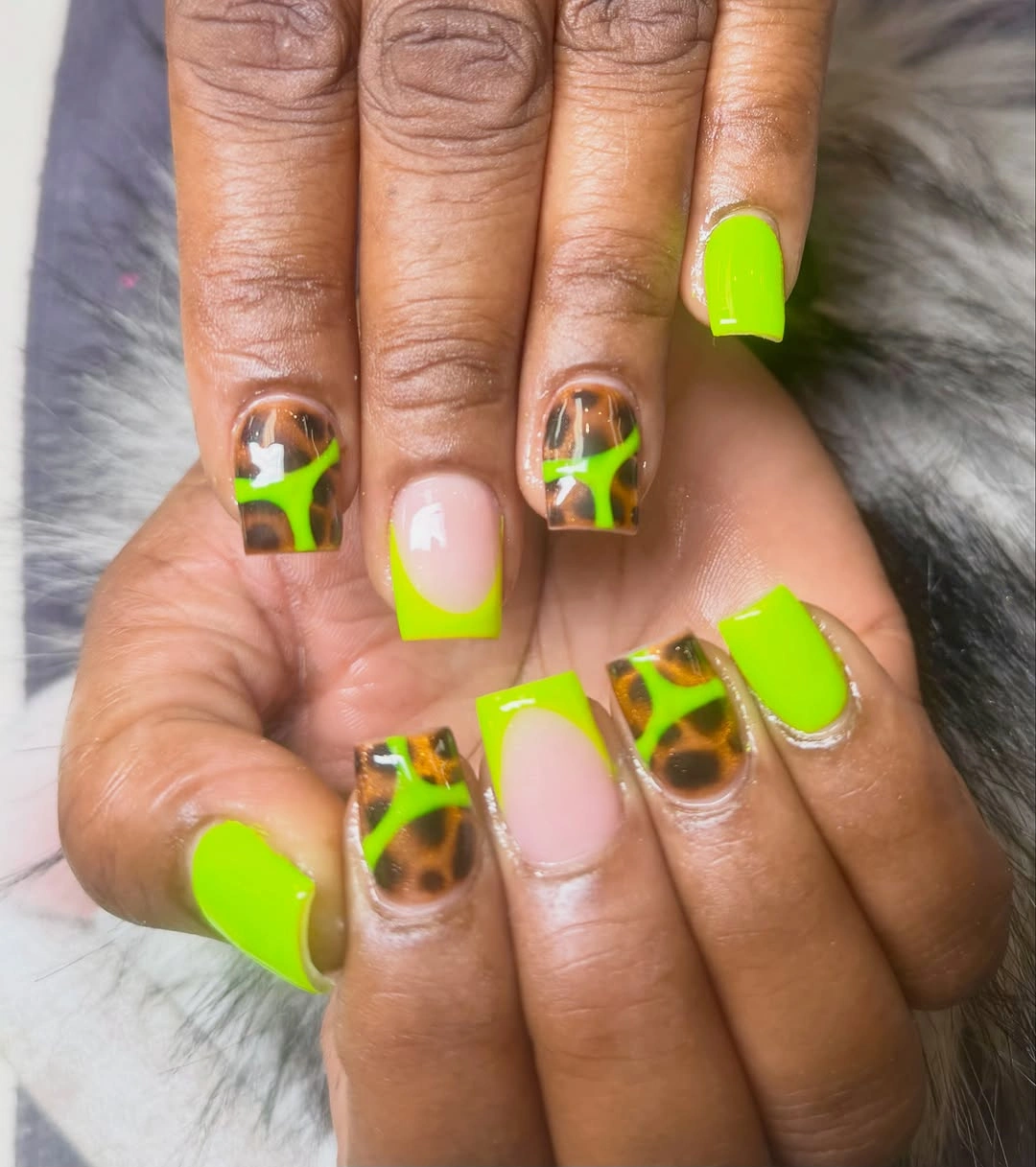
I would limit the brightest green to a few nails or use it as a thin perimeter detail. That allows the brown pattern to provide depth without competing with the neon. Olive or moss green can also create a more muted fall interpretation.
Because the color contrast is already strong, extra embellishments are unnecessary. The irregular brown pattern has the added benefit of disguising small differences in application better than a perfectly straight graphic line.
Coral Color with Small Cuticle Sparkle
Glossy coral covers the compact nails almost completely, with tiny dark embellishments arranged near the cuticle on selected fingers. The placement keeps the bright shade as the main feature while adding a small jewelry-like detail.
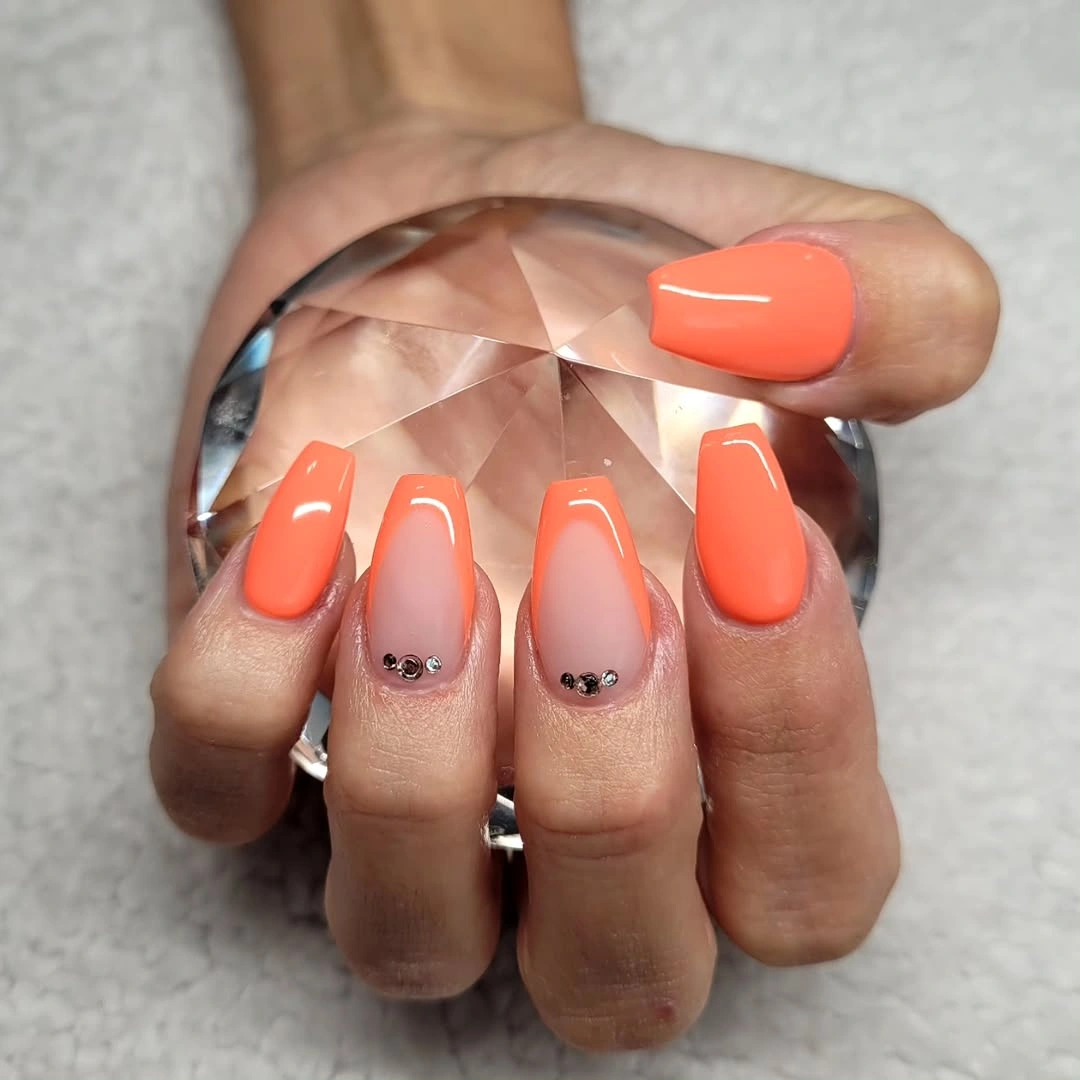
I like placing embellishments near the natural curve of the cuticle because the tip remains clean. This is especially useful on short nails where additional decoration near the free edge can make the surface feel crowded.
Coral is naturally attention-grabbing, so the rest of the manicure does not need much. Gold or neutral embellishments could replace the darker accents if a softer combination is preferred.
Pale Lavender Pink in a Smooth Solid Finish
A pale lavender-pink polish gives these short nails a quiet, polished appearance. There is no artwork competing with the color, so the smooth surface and carefully shaped corners become the main visual features.
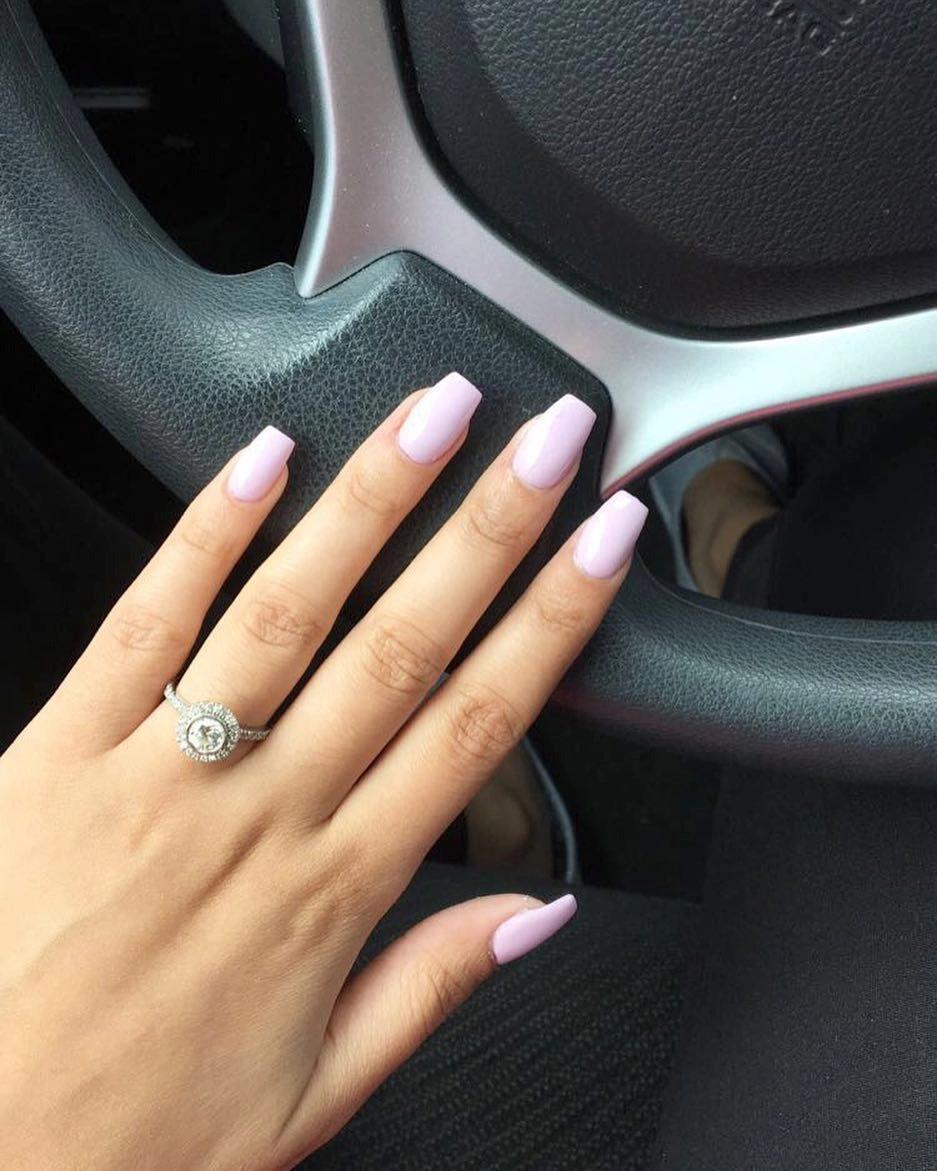
I would keep the square edges softly rounded rather than sharply filed. That small adjustment makes the compact shape look more refined and prevents the pale color from appearing too severe.
A solid manicure like this is easy to style with different outfits because it does not rely on a seasonal motif. The cooler pink undertone works beautifully with cream, gray, chocolate, and muted berry clothing.
Rose Pink with Fine Gold and Dark Curves
Glossy rose pink becomes more defined with fine dark curves placed around the tips and sides. Narrow gold details sit alongside some of the darker lines, creating a subtle metallic effect while leaving most of the nail uncovered.
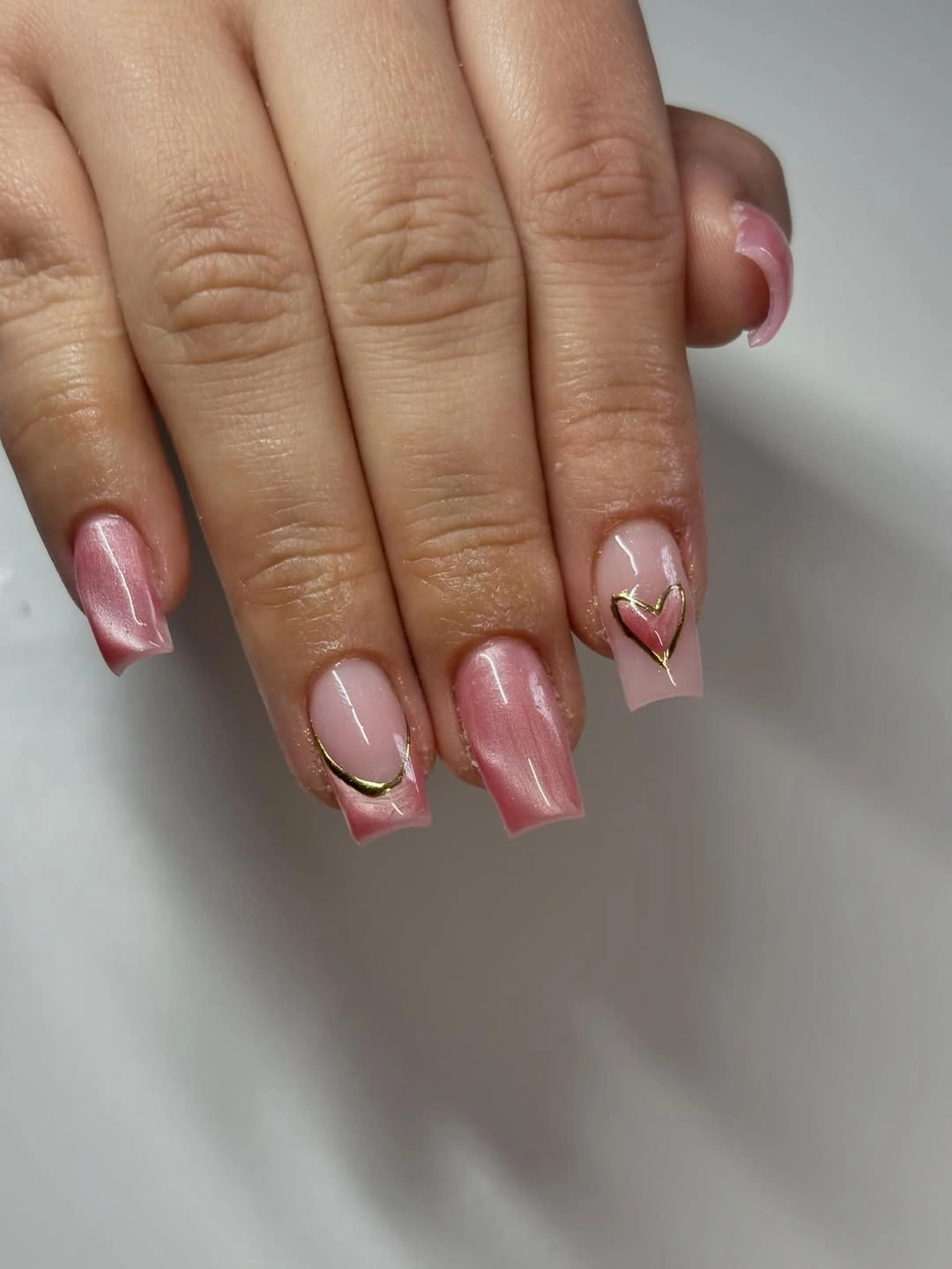
The open center is essential here. I would use only one or two curves on a short nail rather than trying to reproduce several overlapping outlines. This keeps the design delicate and allows the pink base to remain visible.
Gold gives the manicure warmth, while the dark line provides enough contrast to make the shape readable. Keeping both accents extremely thin makes the result feel polished instead of overly decorative.
Milky Pink White Nails with Nothing Extra
A milky pink-white polish creates a completely uniform finish across these short rounded-square nails. Without artwork or accent colors, the manicure depends entirely on a consistent shape, even coverage, and a smooth glossy surface.
I particularly like this approach when I want the nails to complement an outfit instead of becoming the main accessory. A warm ivory version can create a softer appearance, while a cooler milky pink feels cleaner and brighter.
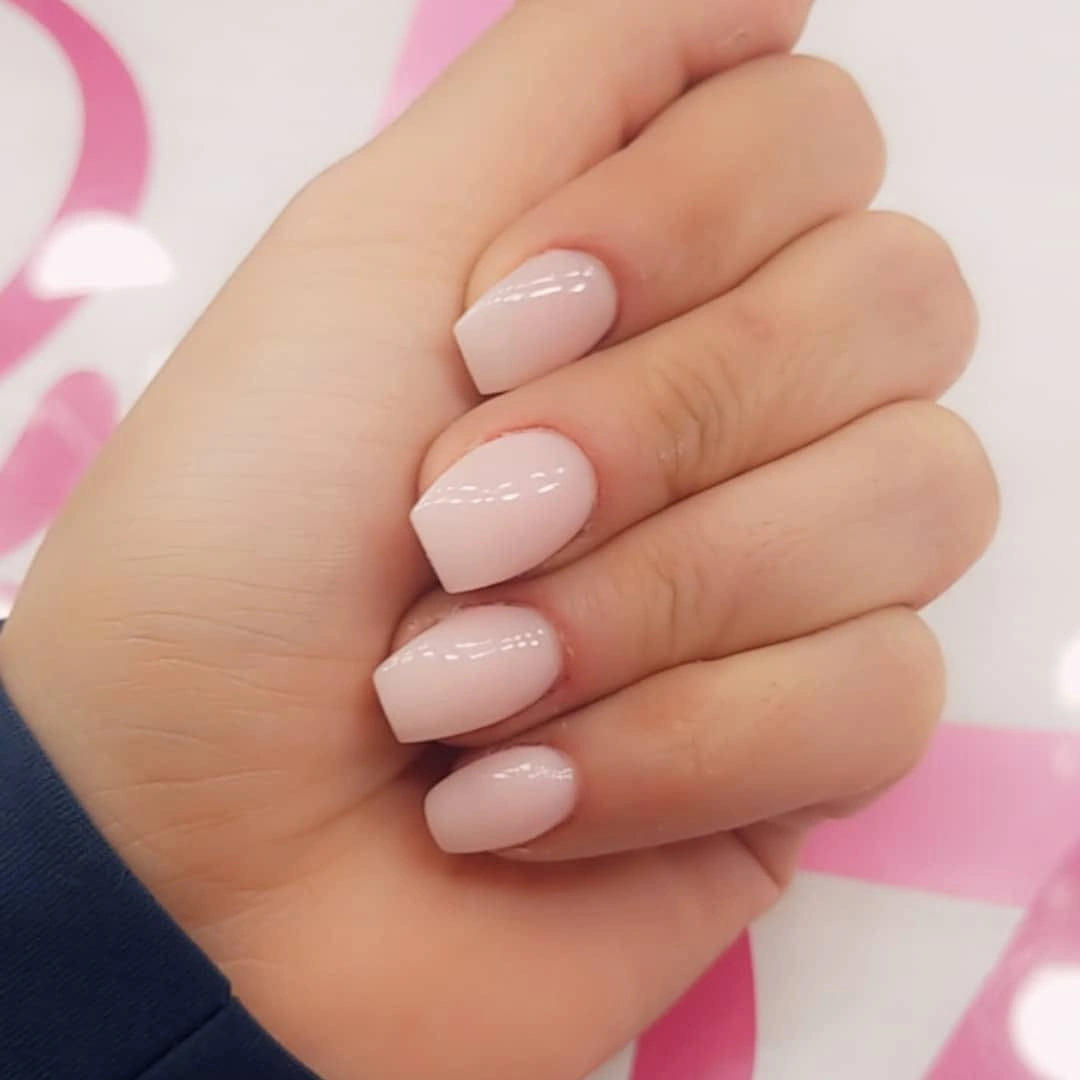
The simplicity does require careful finishing because every irregular edge can be noticed. Still, the absence of patterns makes maintenance straightforward, and the same manicure works for casual days, workwear, and dressier occasions.
Pale Yellow Tips with Dotted Pink Centers
Soft pink nails are finished with pale yellow French tips, while tiny white details appear around selected transitions. The warm yellow creates a cheerful contrast against the translucent base without requiring a large illustration.
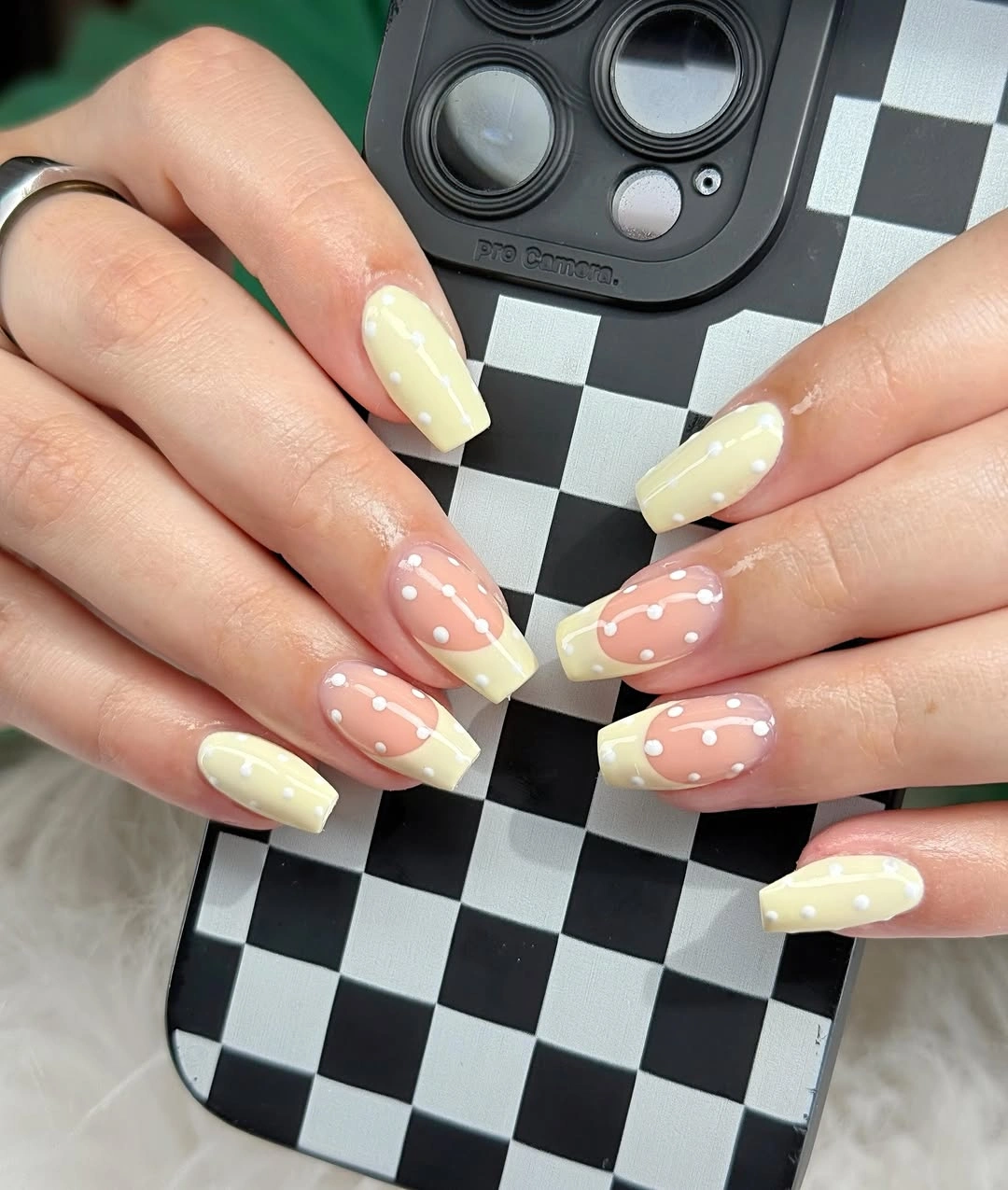
I would keep the yellow band fairly narrow so it does not visually widen the tip. Small dots can then follow the boundary between the two colors, creating detail without covering the center.
For a more autumnal version, the yellow can be shifted toward muted mustard or warm butter. Leaving several nails without dots also gives the manicure a calmer rhythm.
Copper Shimmer Anchored by Dark Tips
Warm copper shimmer provides a luminous center, while deep olive-brown tips create a strong border around the free edge. The metallic surface catches light beautifully, while the darker color adds enough contrast to give the manicure definition.
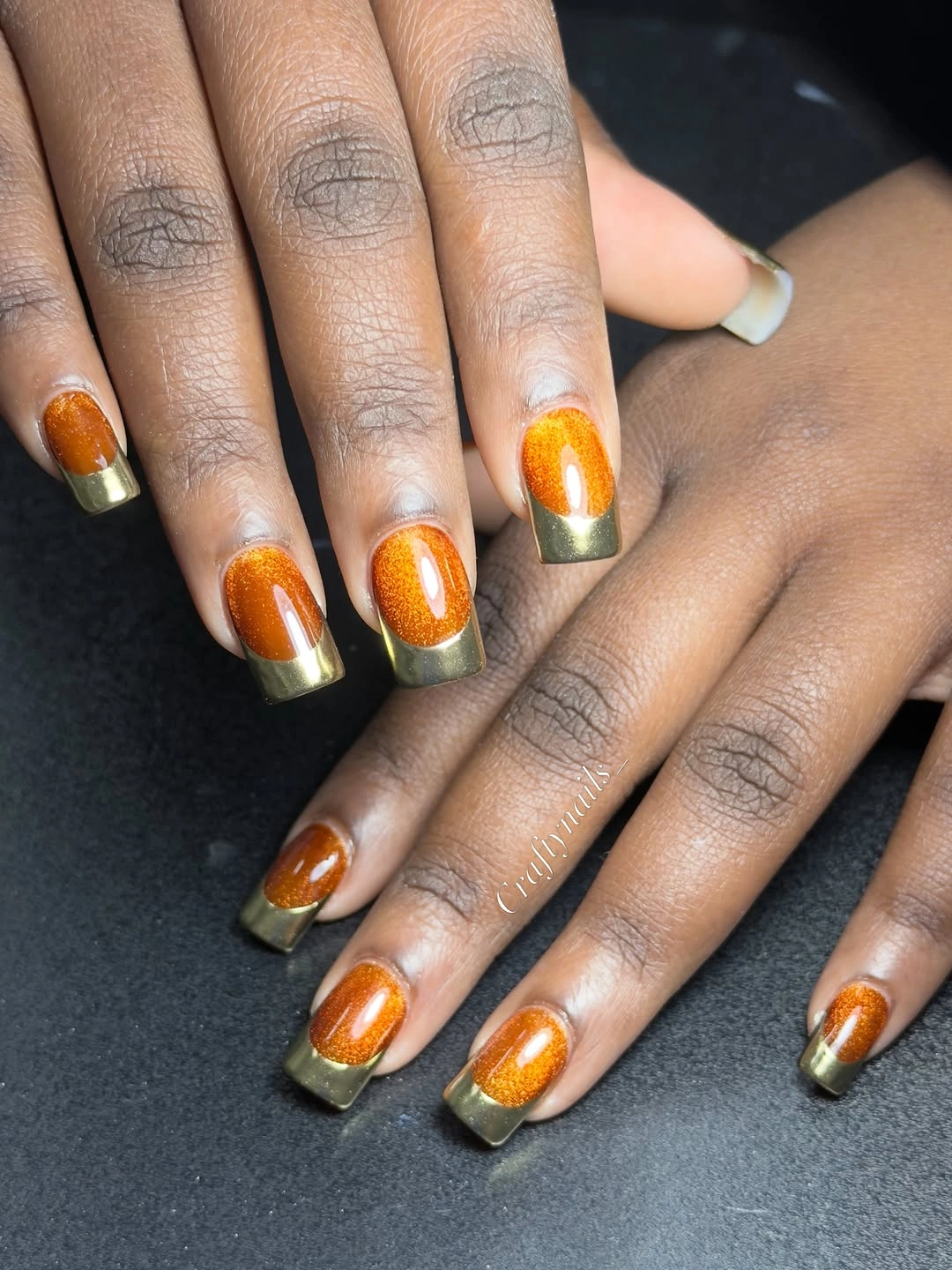
The width of the dark tip should be adjusted to the nail length. On short nails, a slim band allows more copper to remain visible and prevents the darker shade from taking over the entire surface.
Bronze can replace the brighter copper for a softer effect, while deep chocolate can substitute for the olive-brown edge. The two-tone construction remains the same even when the palette changes.
Leopard French Tips on a Pink Base
A soft pink base provides a clean foundation for leopard-inspired spots concentrated around the tips. Small metallic accents can be added along the boundary, but the spotted French edge already gives the manicure plenty of personality.
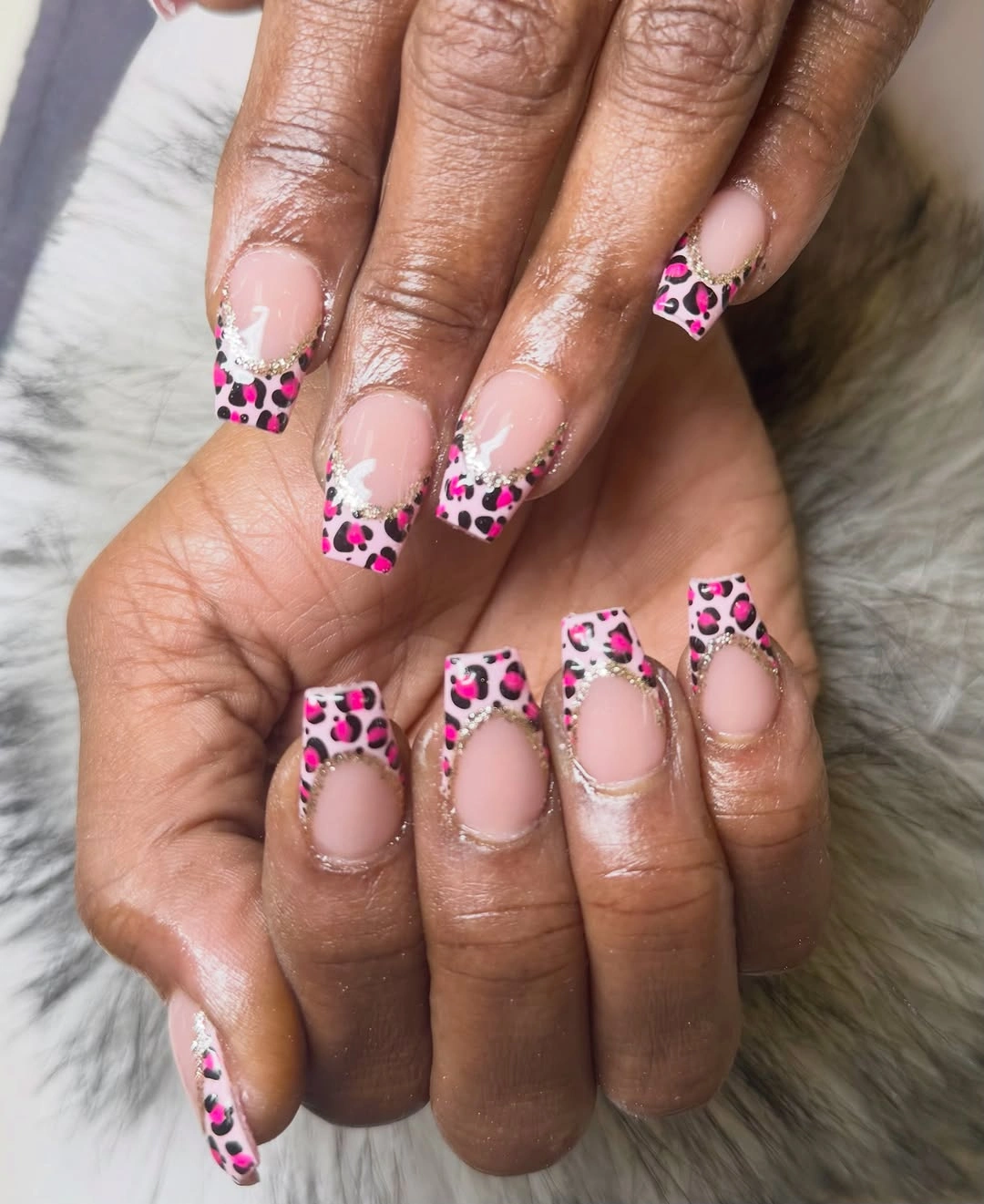
I prefer using fewer, larger spots on short nails because they remain easier to recognize. The center should stay mostly clear so the animal-inspired pattern does not visually consume the nail.
Black and pink create a sharper result, while brown, beige, and cream can make the same idea feel warmer for autumn. Keeping the print limited to the tip makes it much more wearable than a fully patterned surface.
Wavy Multicolor Tips over Glossy Pink
Glossy pink nails become more playful with curved tip lines in shades such as turquoise, yellow, coral, and black. The waves follow the free edge and create movement while leaving the majority of the nail clean.
Spacing is particularly important with several colors. Each band needs enough room to remain recognizable, especially when the nail is short. A two-color version can be used for a quieter interpretation.
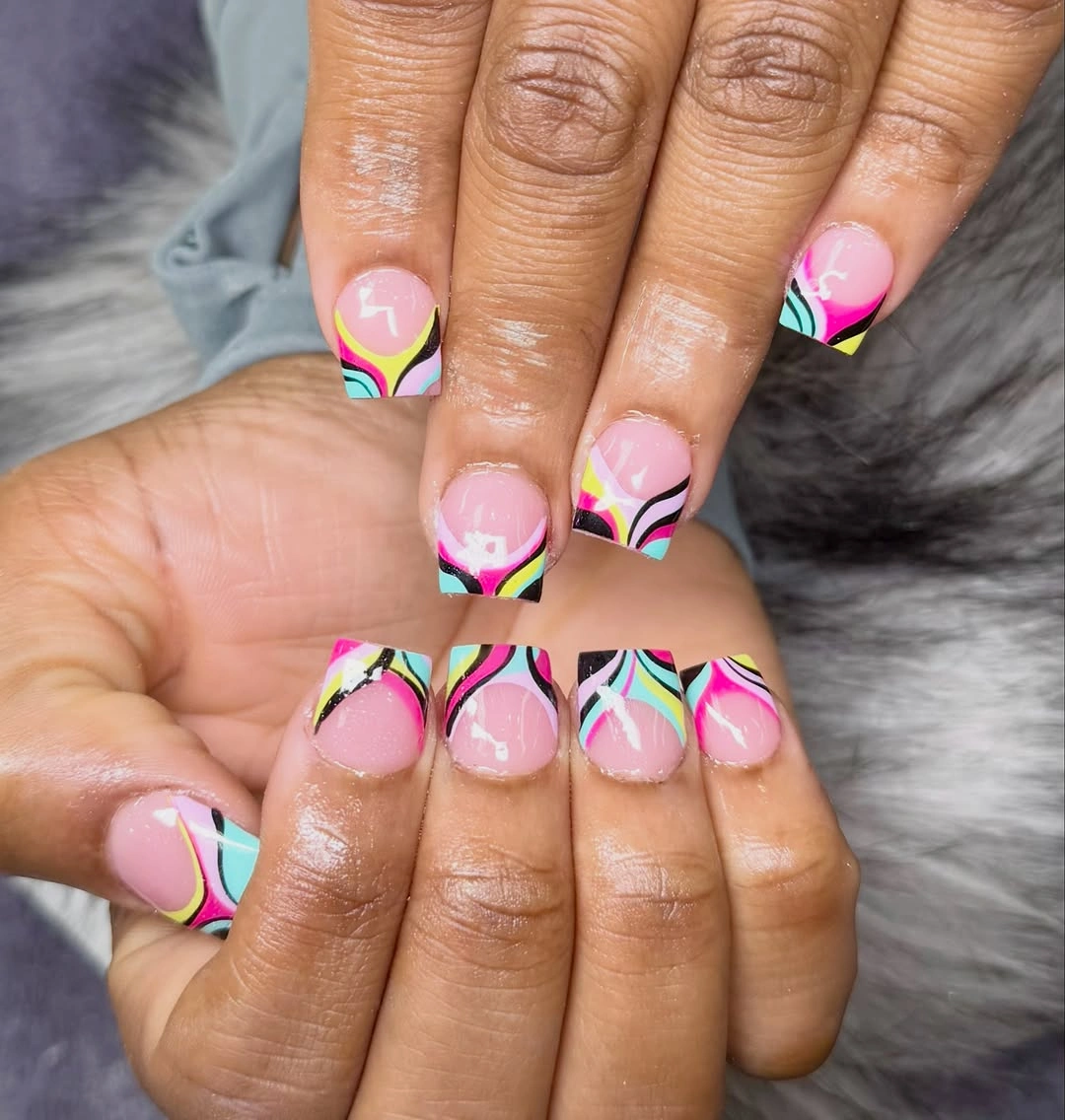
The curved shapes do not need to match perfectly from finger to finger, which makes the style more forgiving than rigid geometric art. However, too many narrow lines can visually merge, so I would reduce the number of bands on a very compact nail.
Red Black and Nude with Silver Starbursts
Deep red, black, and nude panels create a bold base for fine silver starburst details. The darker shades give the manicure depth, while the nude sections create breathing room between the stronger colors.
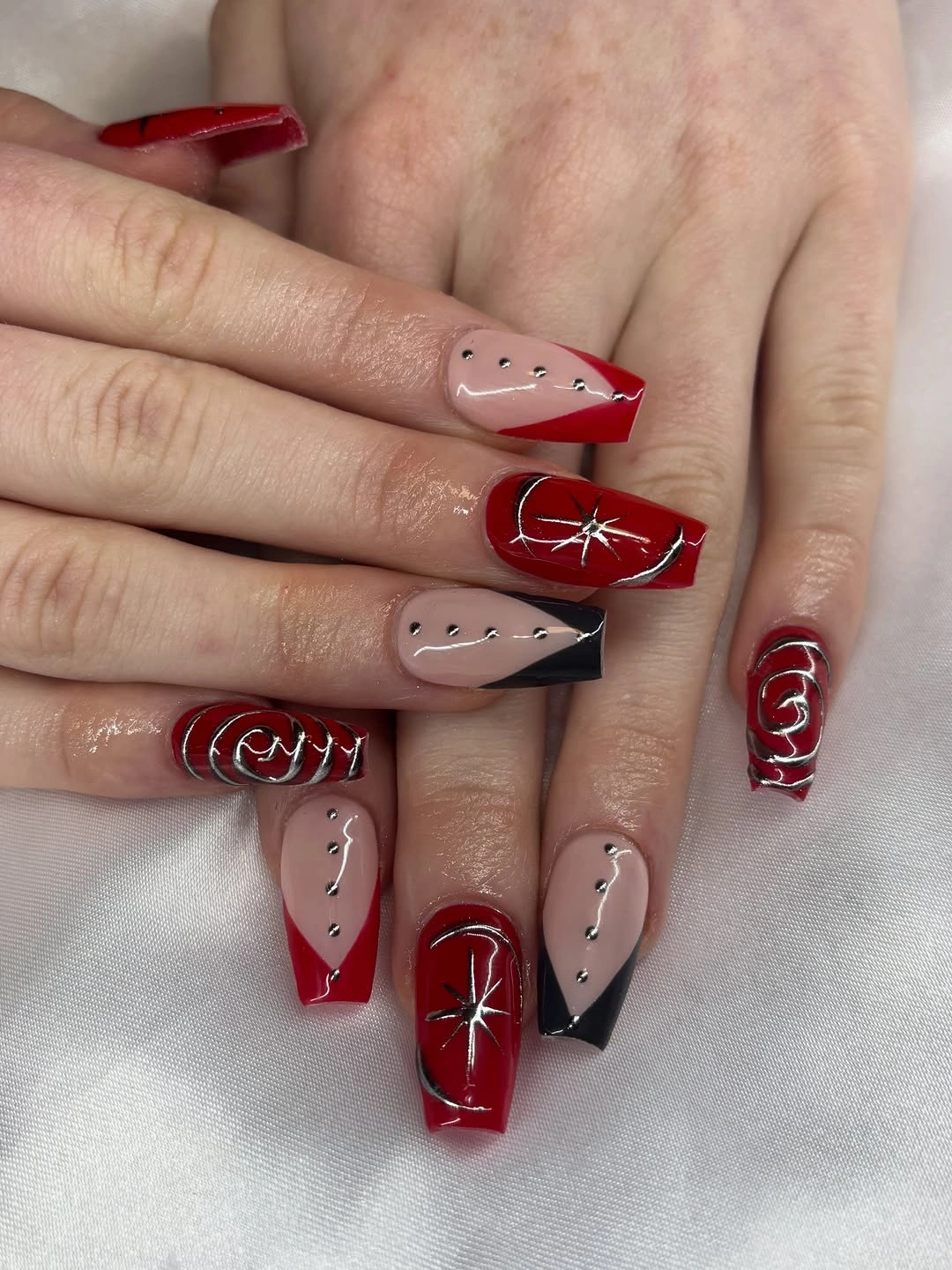
I would simplify the design significantly for a short coffin shape. One small silver burst on a nude accent nail can carry the same idea, while the remaining nails could use red or black French tips.
The longer square shape gives the original concept more space for its fine details. A shorter version is easier to wear and maintain, especially when the metallic artwork is kept small.
Soft Pink with a Single Textured Flower
A pale pink base keeps this manicure soft, while a raised white flower provides a tactile focal point. Small bead-like accents and a muted mint detail add subtle variation without turning every nail into a separate statement.
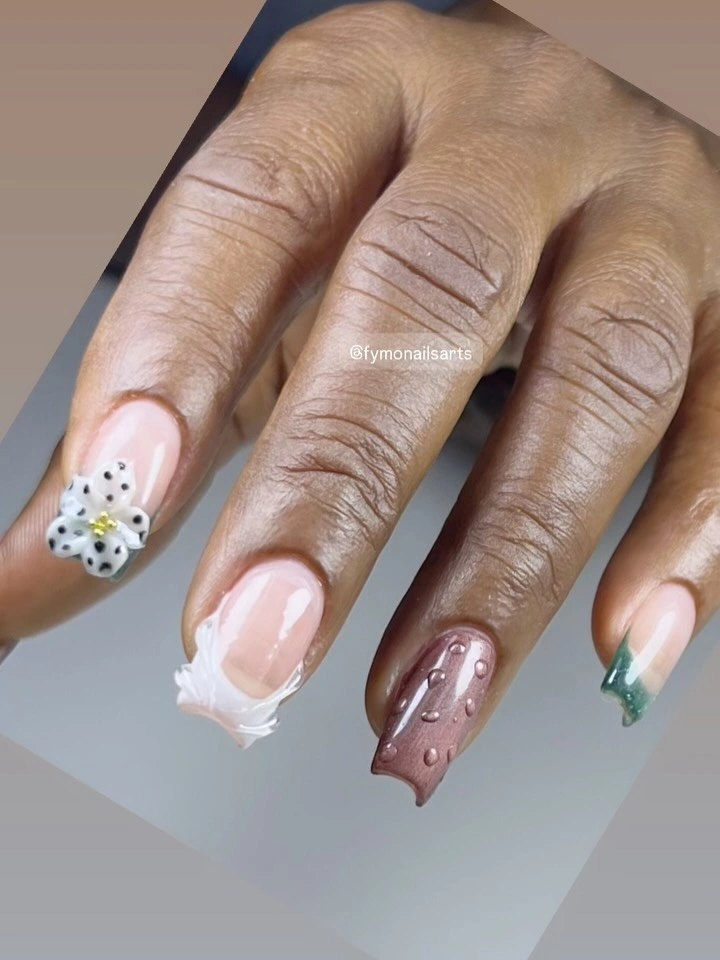
I would place the dimensional flower on just one finger and keep the remaining nails flatter. This creates a clear focal point and also reduces the chance of textured details catching on clothing.
Soft colors can make raised details appear delicate, but dimensional nail art still needs careful application. If practicality is the priority, the flower can be recreated as a flat white outline while keeping the same placement.
A Clean Red Solid for Short Rounded Squares
Saturated red polish gives these short rounded-square nails a strong appearance without any additional decoration. The glossy finish allows the color to remain the center of attention while the softened corners keep the compact shape elegant.
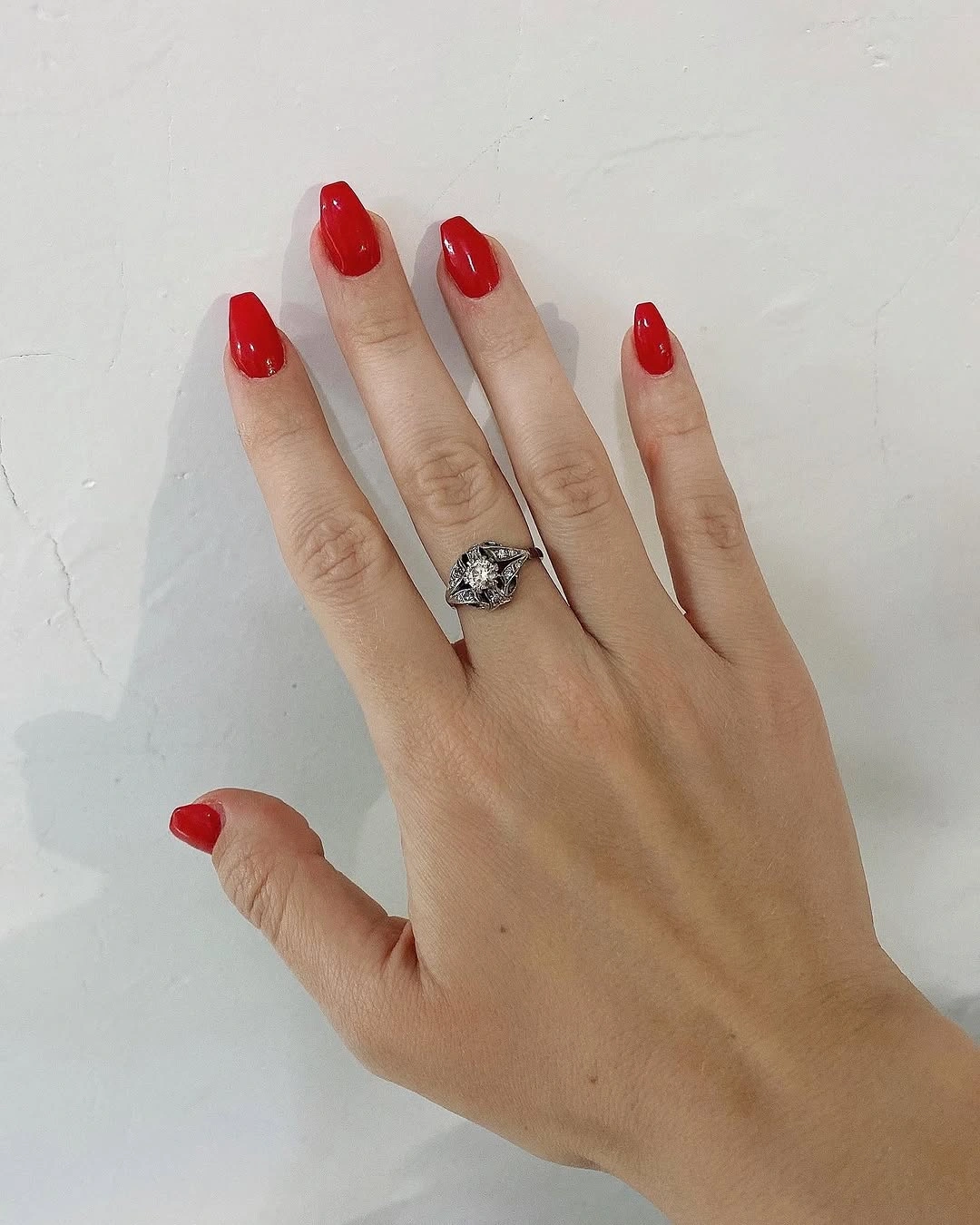
I like this option when someone wants a statement manicure without spending time choosing multiple colors or patterns. A precise outline and smooth surface are enough to make the shade feel intentional.
The tradeoff with bright red is that tip wear can be noticeable. Regular touch-ups help maintain the clean appearance, but there is no artwork to coordinate if one nail needs to be repaired.
Neon Color Blocks with Repeated Metallic Dots
Vivid orange, pink, and yellow appear as separate blocks across the nails, while tiny metallic studs provide a repeated detail. The bright colors give the set energy, but the matching embellishment helps connect the different shades.
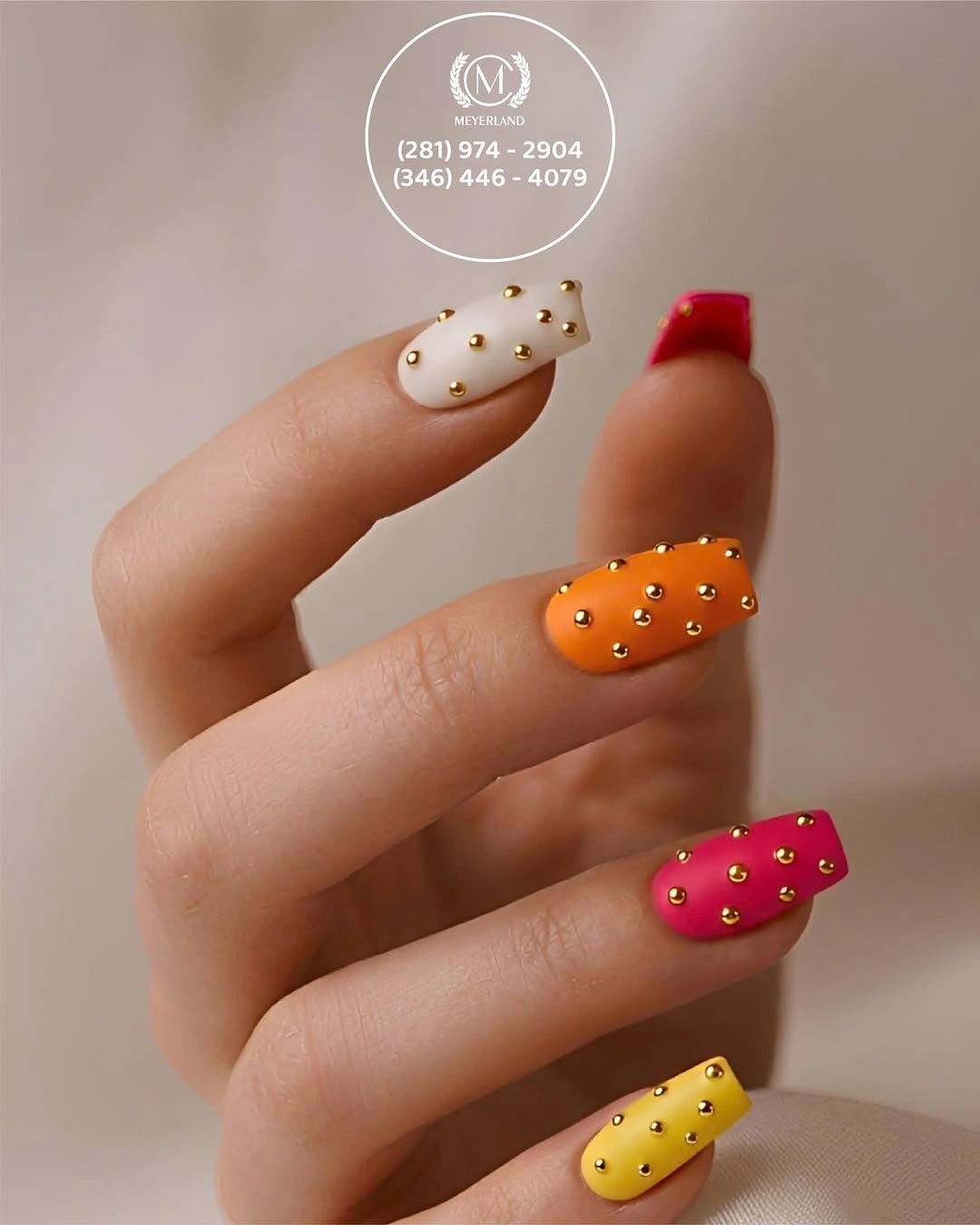
For a more wearable version, I would reduce the palette to two colors and place the metallic dots only on a couple of accent nails. Muted pumpkin, berry, and cream can also create a similar composition with a more autumn-focused mood.
The solid color blocks are already strong enough to carry the manicure. Larger charms would add unnecessary weight, while smaller studs can provide just enough texture without taking over the bright surfaces.
Coral and Black with Slim Botanical Lines
Warm coral and solid black create a dramatic contrast, while nude nails feature fine black botanical lines. The branches remain narrow and centered, giving the short nails a little vertical movement without covering the entire surface.
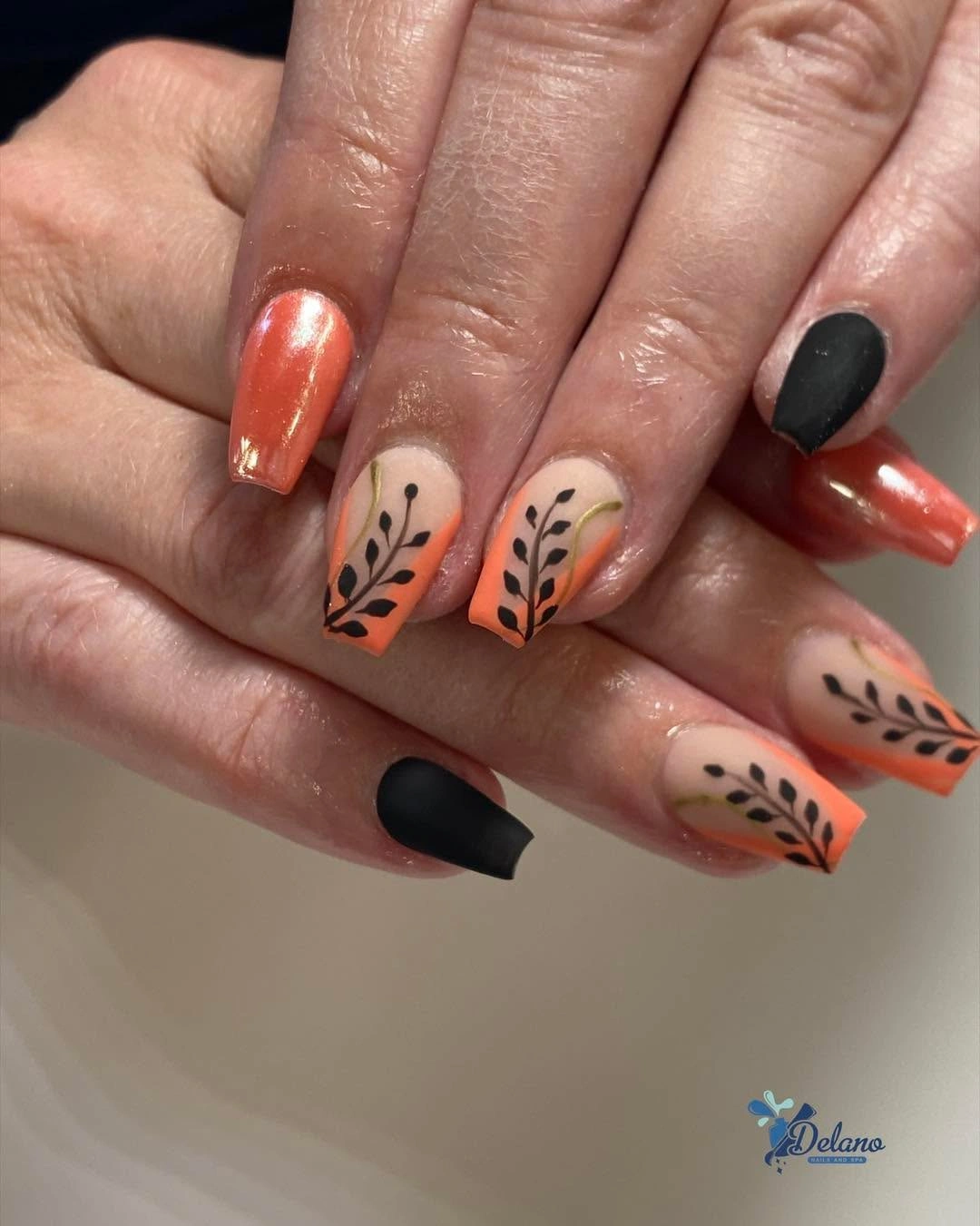
I would keep the botanical artwork on one or two nails and allow the remaining fingers to carry the coral or black. This creates a clear focal point while preserving the strong color-blocking effect.
Rust or burnt orange can replace the coral when a more autumnal shade is desired. The botanical lines should remain slim because heavier leaves or branches can quickly crowd a short nail plate.
Translucent Pink with a Pale Shifting French Edge
A translucent pink base creates a soft foundation for pale tips that shift subtly between creamy white and a cool green tone. The delicate edge gives the tapered shape definition without adding dense artwork.
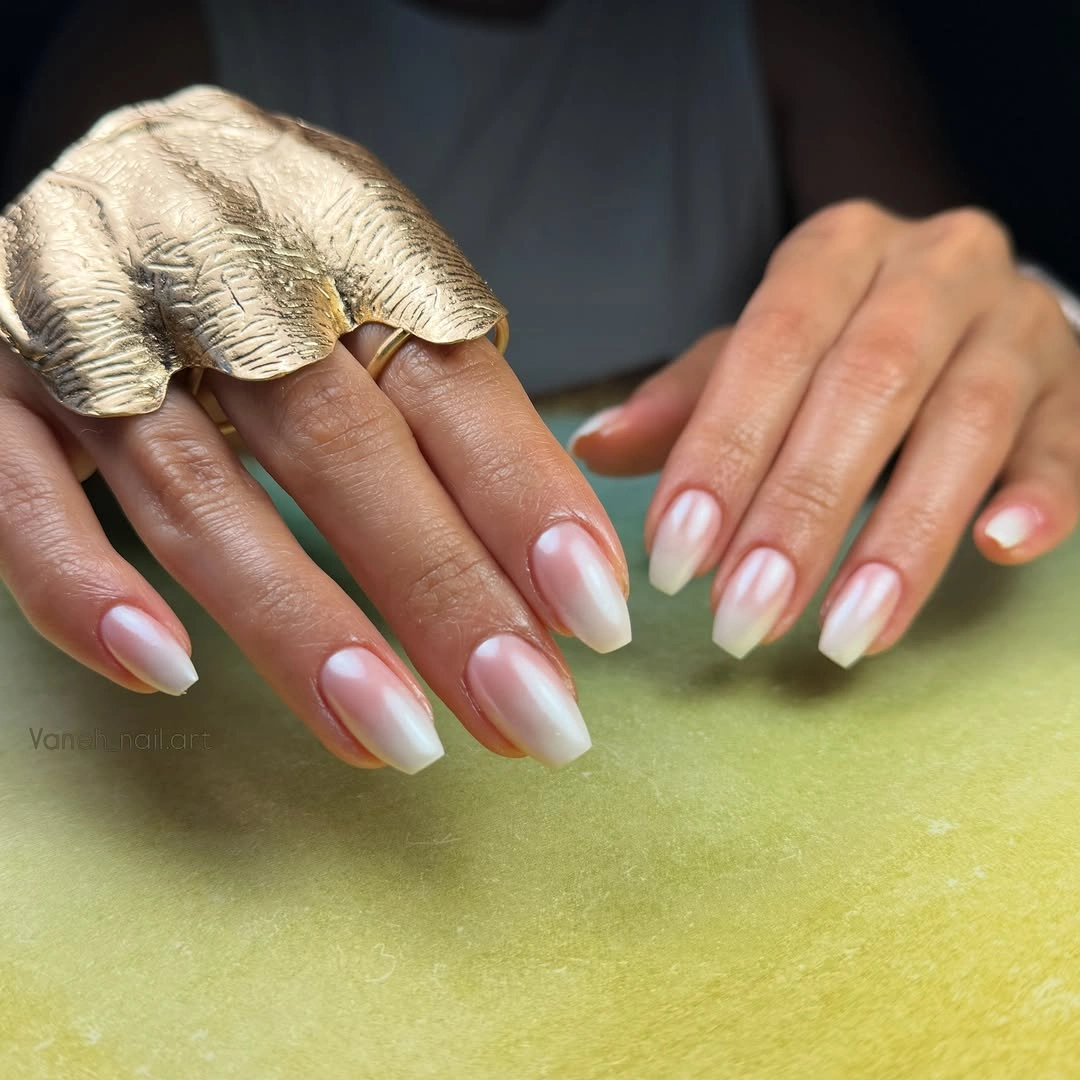
I would keep the color transition narrow, especially if adapting the concept to shorter nails. A single cream shade can also replace the shifting effect while maintaining the clean French structure.
This style depends on a smooth finish and precise tip, so the outline should be kept tidy. Its restrained palette makes it easy to wear with both casual and polished fall outfits, proving that a small color shift can be enough to give a simple manicure its own identity.